


Updated: Aug 10

After the whirlwind of living and working in Sydney, we were super duper ready to escape the urban hustle, head out to the Aussie outback, and finally decompress and unplug. Jelley had spent weeks researching a few different options around Australia, trying to figure out where we could get the best dose of nature. Unfortunately, we happened to be traveling right around the Easter school holidays, which meant most of the usual hot spots like the Great Barrier Reef and Tasmania were shockingly expensive to get to.


With flights to the coast costing an absolute fortune, we landed on a happy alternative doing a “little” road trip straight through Australia’s Red Centre. There was something totally epic about driving right through the middle of the continent, and it felt like the ultimate way to see the real, rugged Australia.
Our journey officially kicked off when we landed in Adelaide on Easter Sunday. It is always a slightly weird experience to visit a city over Easter. Most of the local shops and restaurants were completely closed, the school holidays were just kicking off, and the locals were already out exploring their own backyard a little further afield.
Adelaide is the capital of the state of South Australia and sits beautifully on the southern coast of the continent, tucked right between the rolling Adelaide Hills and the ocean. Home to around 1.4 million people, it holds a unique spot in Australian history because it was established as a planned colony for free settlers rather than a penal colony for convicts (a bit like Melbourne). Famously nicknamed the "City of Churches," it instantly reminded us a lot of Christchurch with its grid-style streets, surrounding hills, and gorgeous historic stone steeples dotted all over the skyline.
We chose Adelaide as our launching pad as it is the southern gateway to the Australian outback. From here, the Stuart Highway points straight up into the vast, beating red heart of the country, making it the perfect starting line for the adventure we were about to embark on.
We stayed centrally a hotel in Adelaide that kindly agreed to store our massive suitcases for the weeks we would be out on the road. It was a huge relief not to have to drag all of our life's belongings into the outback with us. Because it was the holiday weekend, we really weren't sure what might actually be open for dinner, but we were pleasantly surprised to find a cute Mexican restaurant with incredibly good food. Eating there made us both feel a wave of excitement for our upcoming trip to the USA, knowing the legendary Mexican food that would be greeting us on the other side of the Pacific.


With just one full day to explore before collecting our rental car, we spent the morning wandering through the quiet, ghost-town streets trying to hunt down somewhere, anywhere, open for “brekkie” (as the Aussies call it) on a public holiday. Once we finally found some fuel, we spent the afternoon relaxing in Adelaide’s beautiful botanic gardens.


While strolling through the greenery, we were surprised to learn that a massive Dale Chihuly glass art exhibit had been hosted there some years prior. It instantly brought back fond memories of our visit to Seattle way back in 2017 (see that old blog post here —> link). Naturally, we pulled up photos of that trip, and looking back at our first major world adventure together, we couldn't believe how young we looked. Just one single Chihuly chandelier piece remained in the Adelaide greenhouse, which the botanic gardens had purchased to keep permanently. It was a beautiful little full-circle moment to stumble upon right before heading into the wild.


Our rental car turned out to be a great little adventure vehicle (Subaru Crosstrek) and exactly what we needed for the journey ahead. We were heading out on an extremely long road trip right during the absolute peak of global fuel price surcharges, driven up by geopolitical tensions and conflicts overseas. Back in Sydney, many of our colleagues had actually cancelled their own holiday road trips because of the skyrocketing costs. We soon discovered this was a theme across Australia. The campgrounds were surprisingly empty, and the main roads felt isolated and quiet. Fuel is always expensive in the outback anyway, but we noted that it was still more affordable in Australia than back home in New Zealand. We simply sucked it up and continued on, determined to camp out and self-cater as much as possible to compensate for the extra costs at the pump.


Naturally, our very first stop on the way out of town was at Costco to get properly stocked up for the epic drive ahead. It had been several years since we last stepped foot inside one, and it is always incredibly easy to get completely carried away in this legendary American institution. Luke, true to form, absolutely could not resist the giant muffins and cookies, so a good portion of our outback rations consisted of bakery goods. With a boot (trunk) filled with bulk snacks and fuel in the tank, we finally hit the open road!
We had a seriously long drive ahead of us, looking at about five hours behind the wheel to reach our first destination of Ikara-Flinders Ranges National Park. As we left the city of Adelaide behind and cruised out of the rolling hills that surround the city, the landscape transformed completely. The road became noticeably flat, and we found ourselves journeying along impossibly long and straight roads with a whole lot of nothing around for miles. We just kept chasing the horizon until the dramatic peaks of the Flinders Ranges finally appeared looming in the far distance.


Throughout the drive, we were very conscious of making sure we arrived well before darkness. The outback is notorious for wildlife jumping out onto the roads at dusk, and we definitely did not want to test our rental car (and insurance) against a kangaroo. The timing ended up being incredibly tight because the recent daylight saving time change really got us. With the sun setting around 6pm now, we suddenly had one hour less to play with in the evening. Fortunately, we made it just in time, greeted by a welcoming committee of wild emus right before pulling into the campground just before sunset.


It was a really cool campground attached to a larger resort that had recently changed owners, and we instantly fell in love with the spot. We would later learn that this campground (called Wilpena Pound Campground) was recently acquired by a massive national network called “Discovery Parks”. They are a staple across Australia for tent and RV camping, famous for having top-notch facilities and amenities. For our family and friends back home, they are the perfect equivalent to a KOA in the USA or a Top 10 Holiday Park in New Zealand. You just know they are going to be good before you even pull up, and we quickly came to absolutely love them throughout the rest of our roadie.


This first campground also happened to be where we first met Naty and Sandra, two German travellers who were exploring in an awesome pop-top four-wheel drive. Our introduction came when we gave them some coins so they could finish up their laundry. After a quick chat, we learned that this was Naty’s fourth big Australian adventure while it was Sandra’s very first time outside of Europe. As we compared plans, we realised we were following a very similar route and would likely be crossing paths many more times on our road trip.
Australia is filled with lot of weird and wonderful native wildlife, and tonight's big discovery was the “quoll”, a cute, spotted carnivorous marsupial we had never seen before. We also spotted several possums, which is significantly less exciting when you are from New Zealand, where they are considered a major pest. Interestingly, both of these animals had actually been locally extinct in this region for 150 years until a major reintroduction program launched in 2014, and today their populations are absolutely flourishing.


More than anything, Flinders Ranges National Park was our official introduction to lots and lots and LOTS of Australian bush flies. Before moving to Australia, we had been worried about encounters with deadly spiders, snakes, and scorpions, but it turns out the most common and relentless pest of them all is the bush fly. Stepping outside felt like an all-out invasion. They swarm your face with absolutely zero reprieve. We had originally thought mosquitoes might be an issue, but nothing could have possibly prepared us for the aggressive attack of the outback bush flies.

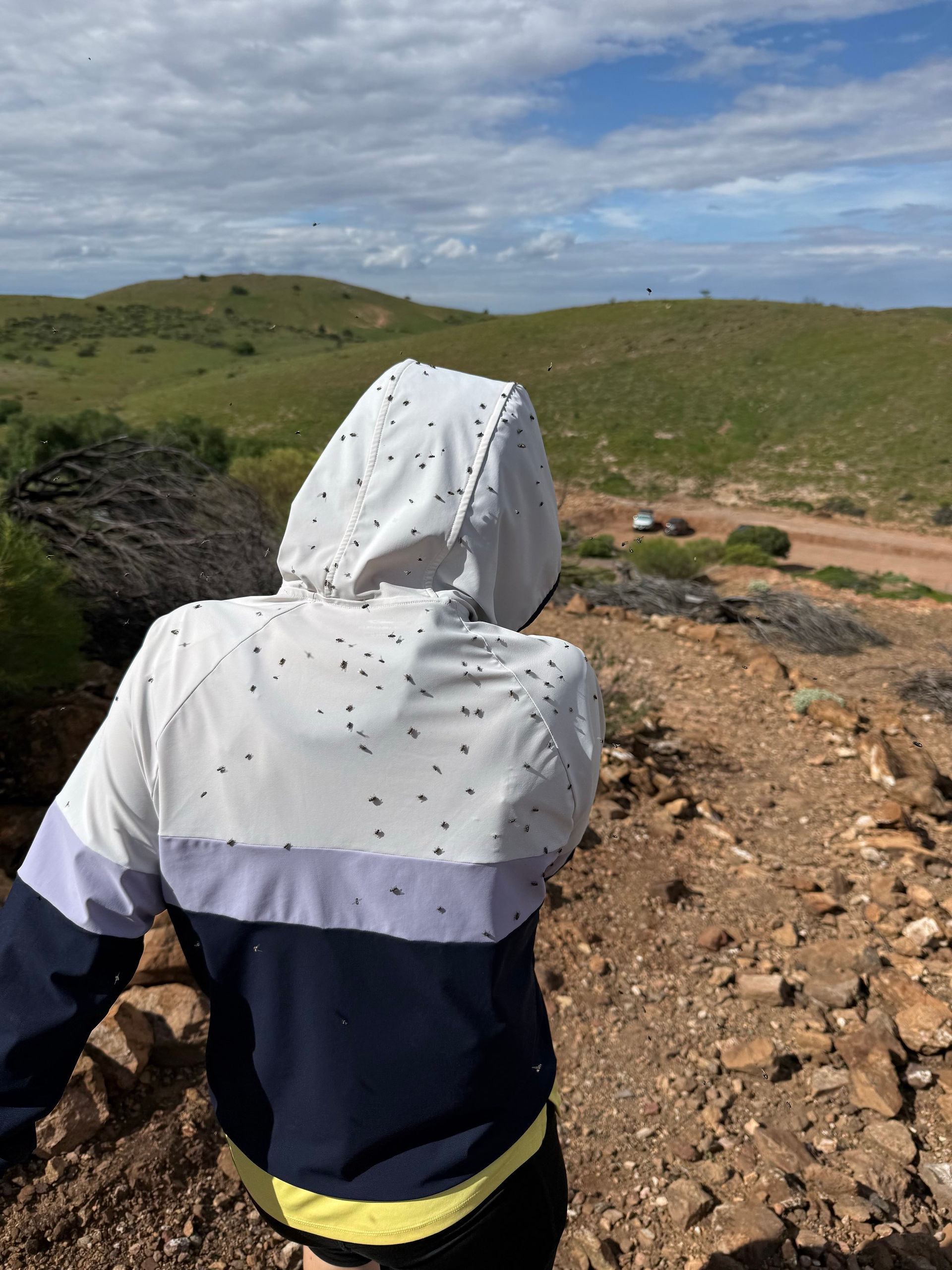

"Boom or bust" was a phrase we kept seeing on informational signs all over the national park, referring to the unpredictable levels of water the region receives and its dramatic impact on the local flora and fauna. Luckily for us, we arrived during a massive boom. Record flooding and torrential rain up north in the Northern Territory had trickled down, translating into a shockingly green and, therefore Fly-infested, South Australia. It was amazing to experience firsthand, but it was certainly a far cry from the dry, barren, dusty landscapes we were fully expecting to see. We quickly dubbed this region more of a “Green Centre” than a red one.
We started early the next morning for a grueling but exciting hike up Mount Ohlssen-Bagge. As the sun rose over the peaks, it brought an intense outback heat, but the trail had us completely surrounded by spectacular scenery and the strenuous climb was well worth the effort. It felt like sightseeing propeller planes were taking off every twenty minutes, soaring right over our heads. Because of the recent flooding, there was a massive interest in aerial tours to see the green surroundings and Kati Thanda-Lake Eyre filling up, which is a rare, once-in-a-generation phenomenon.


Even with the small planes constantly buzzing around us, the trail itself was completely uncrowded and quiet, offering sweeping, dramatic views of the Flinders Ranges and the massive basin below. Luckily, the flies seemed to avoid the high elevations and the early morning sunshine, giving us a peaceful reprieve at the summit.


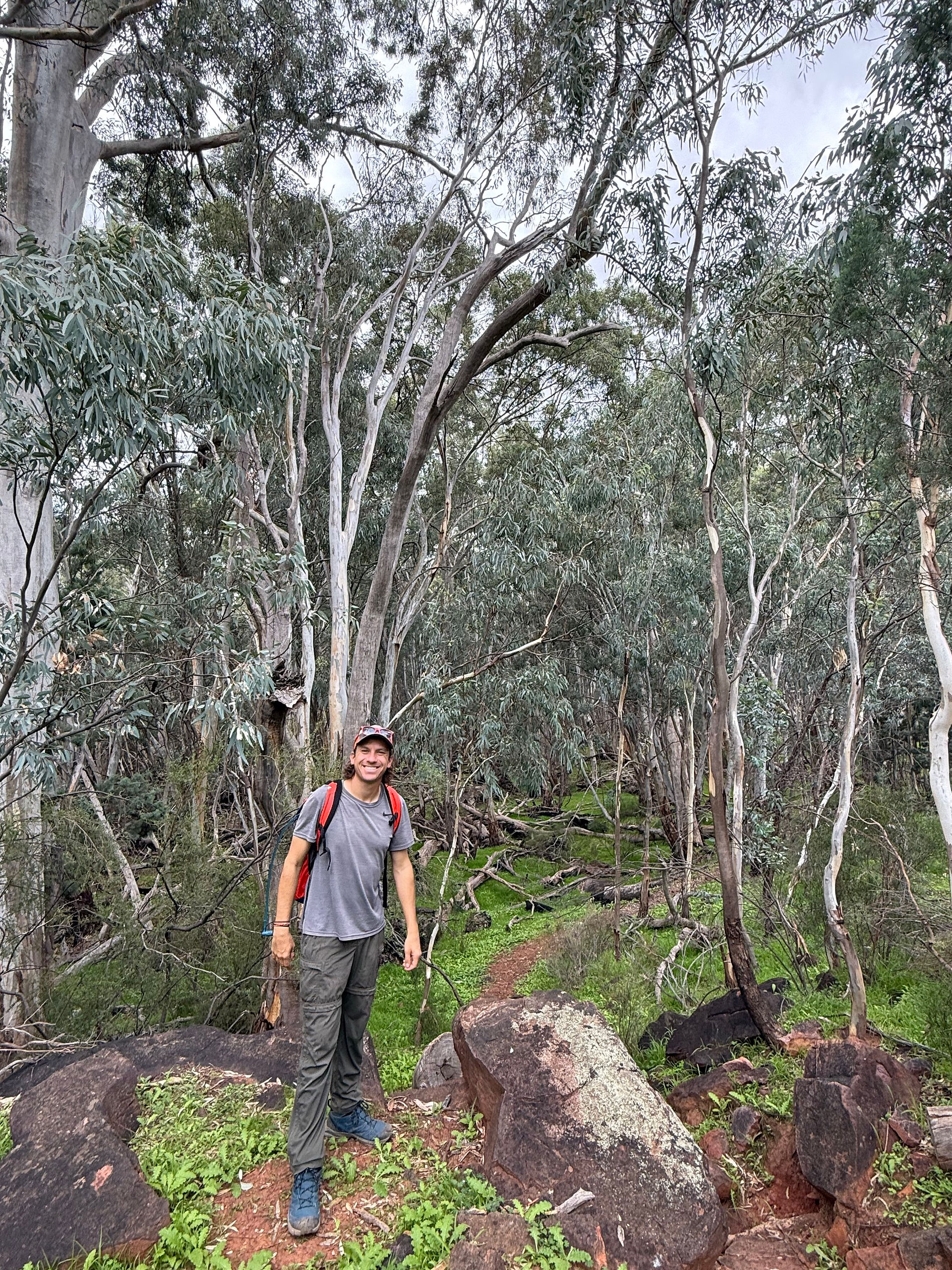
Once we made our way back down into the valley, however, the onslaught instantly resumed. We quickly invented the official game of the trip: trying to get changed out of our hiking gear and back into the car as fast as possible to minimise the number of flies we let inside. Despite our best speed-demon efforts, somewhere around ten to fifteen of them would inevitably sneak through the doors with us, forcing us to spend the first few miles of every drive frantically shooing them out of the windows.
We drove north through the park, winding our way through the gorgeous rolling hills of the Flinders Ranges toward the historic Blinman Copper Mine, one of the major (and only) local attractions in the area. It was a beautiful drive, but the second we stepped out of the car, we realised the flies were everywhere here too.


As we arrived in the tiny town, we spotted a couple of locals sitting outside at a small restaurant. They were completely covered in a blanket of flies, landing all over their plates and food, yet they seemed completely unbothered. It was disgusting to watch, but clearly, outback life breeds a different level of tolerance.


We booked in for a little tour of the mine to learn what it was all about. Fortunately, the tour ended up being just the two of us and the lovely lady who served as our mine guide, giving us a private underground experience. Going down into the shafts provided a very welcome escape from the fly swarms outside. Flies hate the dark and the cold, so we felt a wave of relief the second we stepped inside the tunnels.
The Blinman Copper mine was a fascinating but sober lesson in human persistence, showcasing the crazy mining techniques of the Cornish miners who traveled all the way from England on boats in search of job opportunities. The sheer lengths people would go to make a living back then is mind-blowing. The conditions they endured underground were deeply inhumane, with temperatures above ground frequently soaring between 45 and 50 degrees Celsius (113 to 122 Fahrenheit) . The families lived in basic tents with absolutely no air conditioning to escape the blistering heat, while the husbands and even young children spent their days working in the dark depths below.


The mine operated from 1862 to 1907, and by modern standards, it was an incredibly inefficient operation. It took those workers 45 years of back-breaking labour to extract roughly 200,000 metric tonnes (which is approximately 33,000 African Elephants) of copper filled rock from the earth. Today, with modern machinery, that entire 45-year output would take a commercial mine just under 24 hours to complete.
The story of Robert Blinman, the shepherd who discovered the copper, is legendary: he secured the mineral license and immediately sold it to an English company, walking away as perhaps the only person to secure guaranteed wealth from the venture. The mining company then instituted an exploitative system, treating miners as independent contractors who had to bid against each other for sections of the mine. The work went to the lowest bidder, shifting all financial risk onto families who had to purchase their own equipment out of pocket with no guaranteed yield. With zero workplace safety, teams laboured twelve hours a day, seven days a week, even utilising young children as "powder monkeys" to pack dynamite into volatile rock crevices. Standing in those cold, quiet tunnels today really made us appreciate the stark reality of how brutal their daily lives were.
We carried on with our journey and made a quick stop in the town of Port Augusta to fill up on petrol and grab a couple of fresh supplies. It felt like a super creepy town, a vibe that definitely wasn't helped by the gray rain coming down, and we were both keen to just keep moving. We had a massive amount of driving ahead of us, so we buckled in and tried to mentally break up the journey as we pointed the car north onto the legendary “Explorers Highway” which goes from Adelaide to Darwin.


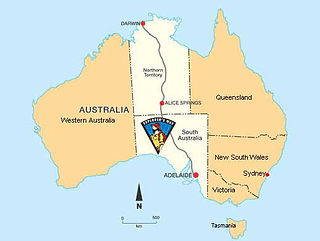
The further away we got from Adelaide, the more noticeably empty the scenery became. The highway transformed into an endless stretch of absolute nothingness. It was a completely different style of road trip compared to anything we had ever done in New Zealand or USA. In those countries, you are used to beautiful or quaint places to stop every hour or so. Perhaps scattered farming towns or passing through a string of charming small towns with a cute cafe or two. Not here. There was just remote, desolate desert.


The road was so perfectly straight and completely flat that it appeared to melt straight into the sky ahead of us. The only features on the horizon were the odd gravel pull-outs on the side of the road, occasionally featuring a random, abandoned concrete picnic table. Every now and then, a massive sign would pop up warning us that the next petrol station was 300 kilometers (186 miles) away. When we would finally reach that destination, that was literally all it was: a solitary petrol station standing in the dirt, with absolutely nothing else around it. It felt so remote and barren, and it was the exact moment we realised we were well and truly entering the real Australian outback.
Before leaving the greenery behind completely, we made a quick pit stop in the historic town of “Quorn”, a charming old railway hub nestled just outside of the Flinders Ranges. This spot is famous for its rich railway heritage, and it was where we first learned about the legendary history of “The Ghan train”.


Originally called the "Afghan Express," the train line got its name as a nod to the pioneering camel drivers who served as the original lifelines of the outback. Local lore says the name started as a railway worker's joke right here in Quorn when the very first passenger to step off the inaugural train was an Afghan man who immediately rushed off to say his prayers. The worker joked that since he was the only passenger, the train should be named after him. When the tracks officially replaced the old desert camel routes in 1929, the locals dubbed the route the "Afghan Express," which eventually shortened over time to just "The Ghan." The train line still exists today, although it’s more of a tourist journey than a traditional public transport route.
If we thought Port Augusta was creepy, we were in for a serious fright with the next few towns we stopped in. Our next stop was the tiny, isolated town of “Woomera”, and it was unbelievably terrifying. Established in 1947 as a secret, restricted military outpost, Woomera became the center of a massive aerospace testing range. It served as a bizarre joint weapons testing facility between Britain and Australia, and later the USA, launching rockets and testing secret missiles in the vast desert. More recently, the Japan Aerospace Exploration Agency (JAXA) has used the area for space capsule recovery missions, and it was even the site where the they tried and failed to launch early satellites into space.


The town sits in the absolute middle of nowhere and felt exactly like a movie set for a horror movie like The Hills Have Eyes. There wasn't a single soul around. The center of town features a creepy, open-air museum with real, vintage missiles and rockets just rusting away in the dirt. It was an eerie, silent, and strange experience, making for a very short stop before we jumped back into the safety of our car and sped away.


Another roadside stop at Lake Hart turned out to be a complete fail. We had planned to stretch our legs and walk down to see the massive salt lake up close, but the flies were at infestation levels. While we easily enjoyed the stunning view from the safety of the car, the second we tried to brave a short walk to the water, the swarms were so overwhelming that we simply couldn't handle it and retreated.


As we kept driving, we noticed more and more roadkill lining the highway. Tragically, almost all of the kangaroos we encountered on this leg of the trip were recently dead on the shoulder, often with the bleached, full skeletons of their ancestors resting right beside them in the red dirt. Sad.
After hours of desolate roads, we were pleased to arrive at Wirraminna Station. Deciding to take a quick break from the tent, we booked a night in a cute bed and breakfast on the working cattle station. When we arrived, we were greeted by a friendly station dog and a hilarious resident goat named Knucklehead. Having a real bed, a full bathroom, and a proper kitchen felt like luxury after only two nights of camping. Knowing that our next stretch involved six consecutive nights in the tent, we could only imagine how desperate we would be for civilization by the time we finally reached Alice Springs!


Our next destination was the eerie and peculiar town of Coober Pedy, a place that sounds and looks like something straight out of another movie. Funny enough its apocalyptic, red-dirt landscapes have actually served as the backdrop for a couple of major films, including The Adventures of Priscilla, Queen of the Desert and Mad Max: Beyond Thunderdome.


Coober Pedy is an incredibly isolated opal mining town located right in the harsh, sun-baked desert of northern South Australia, roughly 850 kilometers (528 miles) north of Adelaide. Established in 1915 after the first discovery of precious opals (colourful gemstones that have rainbow-like colors). Coober Pedy produces the vast majority of the world's opal supply. Today, it is a highly curious community of around 1,500 residents along with what feels like 2 million flies. Because summer temperatures regularly skyrocket ab 40°C (104°F), an astonishing 60% of the locals live underground in cave houses, carved directly into the hillsides to stay naturally cool.


We were excited to explore the area and had plenty of time to check out this subterranean world. However, travellers arriving on the iconic “Ghan train” had just pulled into town and completely booked up a couple of the regular mine tours we wanted to do so we opted for a self-guided tour of the Old Timers Mine and museum instead. We learned a ton about the opal mining industry and the practice of “noodling”, which is the local term for sifting through discarded mining sand in search of missed pieces of precious opal. The historic museum also gave us a glimpse into how the early miners used to live in raw, cramped underground spaces with zero luxuries, a stark contrast to the modern dugouts today that feature multiple rooms, electricity, and fully functional kitchens.


Next, we called into another great museum that focused on local Aboriginal history and regional opal mining. While browsing the exhibits, we learned about the legendary “Dingo Fence”. Originally built in the 1880s to keep dingoes, Australia's wild native dogs, away from the fertile sheep-grazing lands in the southeast, it is an absolutely enormous structure. Stretching over 5,600 kilometers (about 3,480 miles) across the continent, it is officially one of the longest continuous structures in the entire world!


Our accommodation for the night was camping, but this was far from your average above-ground tent site. Our campsite was located entirely underground in a massive cave area. For Jelley, sleeping in a pitch-black, silent subterranean cavern felt like the setup for a horror movie, and she barely slept a wink. Luke, on the other hand, absolutely loved the cool environment and had the best night of sleep on the whole trip. The flies continued to haunt us throughout our stay, but they strictly refused to enter the dark caves. It was the exact moment we realized why the locals choose to live underground. It provides a perfect escape from both the blistering desert heat and the fly onslaught. We tried our best to enjoy a spectacular outback sunset outside, but the swarms quickly became way too much to handle, forcing us to quickly retreat back into our underground lair.


While driving around town, we had spotted a small, handwritten billboard advertising a local Coober Pedy parkrun! We couldn't believe our eyes. Surely there wasn't an organized community run all the way out here in the middle of the desert. We checked the day of the week, and sure enough, it was Friday night, meaning we had the chance to join in the next morning before tackling our next long driving leg.


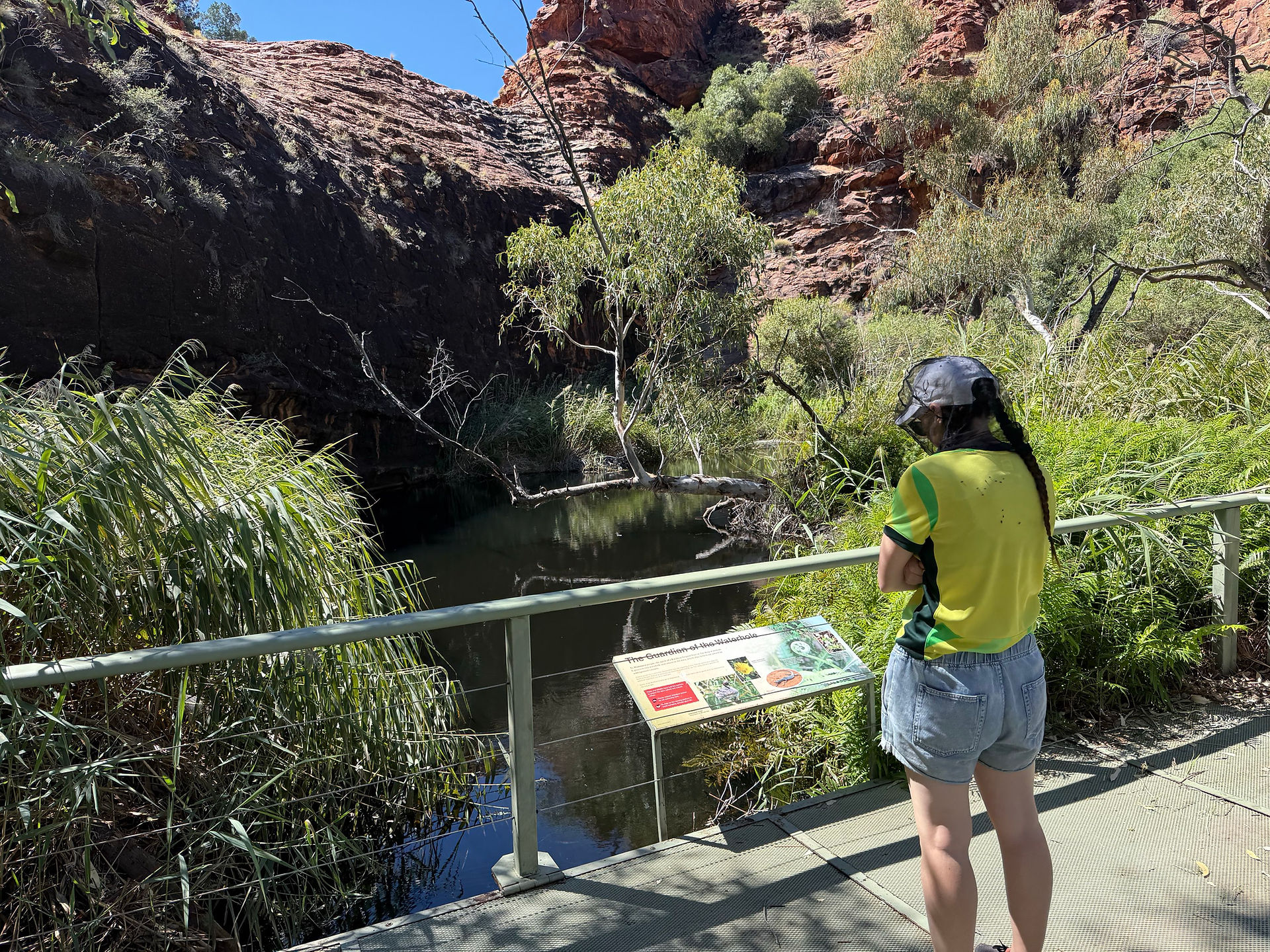
There were just eleven people at the starting line, including the two of us. We got to chat with some deeply interesting locals, including a few schoolteachers whose husbands were opal miners. It instantly became one of Luke’s favourite parkrun courses of all time. Jelley walked the 5km route with the local Anglican minister, who shared some interesting insights into life in such a unique environment, including the persistent challenges of retaining residents and keeping qualified teachers at the public school. It is so isolated out here, with the next major service ‘town’, Marla, sitting roughly 235 kilometers (146 miles) to the north along the lonely Explorers Highway. Before the starting whistle blew, we noticed many of the seasoned parkrunners opting to run with specialized mesh fly nets over their heads to avoid the bugs buzzing into their eyes and mouths. We quickly learned that having one of those nets wasn't just a quirky accessory, it was an absolute necessity for surviving the outback.
We had 745 kilometres (about 463 miles) to drive this day, and we were on an absolute mission to arrive well before the magical sunset curfew (the increased risk of hitting large wildlife on the dark highways). Luckily for our timeline, there were no towns or tourist attractions to stop at along the way to our next destination of Uluru / Ayer’s Rock. Cruising through the middle of nowhere, we fully realized why most travellers choose to fly directly into Alice Springs (the town we were heading to in the middle of Australia). These roads are impossibly long.
It was a fairly easy and peaceful drive, and as the hours ticked by, the flat, barren lands slowly transformed, becoming noticeably more red. Before we knew it, we officially crossed the state border from “South Australia” into the “Northern Territory”.


Crossing this line really put the sheer scale of the country into perspective. Interestingly, Australia is roughly the same geographic size as the continental US, and yet it only has only 6 states compared to America's 50. To make things even wilder, the entire country has a total population of only around 27 million people, and an astonishing 85% to 90% of them live within 50 kilometers (31 miles) of the coast. That leaves the vast interior that we were in completely empty.


The individual sizes of these few states are absolutely mind-boggling. For example, “Western Australia” is so large that it covers about a third of the continent. To match that exact scale in the US, you would have to draw a vertical line straight down from the top of North Dakota all the way to Texas, and every single piece of land west of that line would be grouped together as one giant state.
Interestingly, the “Northern Territory” that we were entering is not actually a state, but a territory (hence the name) similar to the Australian Capital Territory (ACT) or Washington DC in the USA. It originally started as part of the colony of New South Wales, was later handed over to South Australia, and was finally transferred to the federal government in 1911. Because it has a much smaller population and historically lacked the economic infrastructure of the older colonies, it never gained full statehood. This means the federal government in Canberra still holds ultimate constitutional control over it, keeping it a rugged, federally managed frontier.
As we drove hundreds of kilometers north, a massive, flat-topped red monolithic rock suddenly loomed on the horizon. For a second, we were convinced we were looking at Uluru and eagerly pulled over to take a picture. Danielle quickly remembered reading about this exact spot, it was actually Mount Conner, affectionately known as "Fool-uru" because it catches out so many desperate tourists. Still cool though!


After laughing at our mistake, we kept driving and finally reached Ayers Rock Resort just before the sunset curfew. The sprawling complex owns practically all accommodations in the area, a bit like the monopoly you find at the Grand Canyon in the USA. While we still feared outback creepy-crawlies, the campground was a steal at only $84 for three nights. It had fantastic facilities, including a full camp kitchen and hot showers. Once unpacked, we ran up a nearby viewing hill just in time to catch our first real glimpse of the genuine Uluru in the distance, feeling incredibly grateful to have finally arrived.


The next morning, we were up early for an early start before Sunrise to drive straight into Uluṟu-Kata Tjuṯa National Park. For us, this park and its scenery felt a lot like the “Yosemite of Australia”.

Formed over 500 million years ago through massive geological uplifting and erosion, the park centre's around the sacred red monolithic rock. It holds deep spiritual significance for the local indigenous Anangu Aboriginal people, who have lived here for tens of thousands of years. In 1873, a European explorer named it "Ayers Rock" after a South Australian politician, but today, its traditional name of Uluru has been restored to honour its original caretakers.
As we got closer up it was clear Uluru was absolutely enormous! Rising 348 meters (1,142 feet) above the flat desert floor, it is taller than the Eiffel Tower in Paris or the Chrysler Building in New York City. To fully take in its sheer scale, we opted to hike the 10.6-kilometer (6.6-mile) trail that loops entirely around the base, giving us front-row seats to how the rock changes textures and deep shades of red in the shifting outback light.


Until as recently as October 2019, tourists from all over the world used to climb directly up the steep face of the rock. However climbing is now strictly banned to protect the site. Strolling along the base trail was an awesome experience, and it gave us a profound sense of its true scale. We found it very odd how it jets out of the ground in an otherwise entirely flat environment.


Later in the afternoon, we swung by the park's Cultural Centre. You’re not allowed to take photos inside but we found it quite informative. We sat in on a talk by a local ranger who explained the rich history of the different Indigenous communities across the continent. It was a stark eye-opener to learn that Australia was once home to over 800 distinct Aboriginal languages, whereas today only about 10 to 20 remain actively spoken. The ranger also spoke about their historic hunting techniques, showcasing the brilliant ingenuity and deep ecological knowledge required for a society to successfully thrive in such an unforgiving, sun-baked landscape for millennia.
Inside the centre, we also got to view some intricate Indigenous artwork and watched a fascinating documentary produced by the local Aṉangu people. The film explored the history and significance of Uluru to the Aboriginal community as well as tourism's impact, which only took off relatively recently.
When we returned to the campground that afternoon, we bumped right into Naty and Sandra, our German friends from the Flinders Ranges. It was awesome to catch up and compare notes about our respective marathon drives through the desert. Because we had planned our day hikes in the exact opposite order, we hadn't crossed paths inside the national park itself, but we knew our itineraries were still closely aligned and that we would likely catch each other again in a few days over at Kings Canyon.
While staying in the area, we were also really curious to check out Bruce Munro’s famous "Field of Light" exhibition. It is the largest art installation of its kind in the world, featuring over 50,000 slender stems topped with frosted glass spheres that gently bloom in the desert at night. It was originally supposed to be a temporary display, but due to overwhelming popularity, it had just been extended for its tenth year.
We decided to buy tickets and give it a shot. A tour shuttle carried us out into the absolute darkness of the middle of the desert, and when we arrived, we were honestly just as impressed by the brilliant blanket of stars in the outback night sky as we were by the art piece below it. It was an incredibly unique, dreamlike experience to quietly wander through the glowing pathways of light.


We had an even earlier start the next morning because we wanted to catch dawn from the “official sunrise viewing area” inside the park. Of course, we were far from alone. Plenty of other travellers had the exact same idea, though some approached the morning with a bit more reverence for the quiet serenity of the moment than others. There was one particularly rowdy young tour group nearby, and we couldn't help but chuckle when we overheard an Irish girl loudly proclaim to her friends, "Never have I ever been awake for a sunrise, and I don't think I ever will be again!"


Once the sun was up, we headed out for an extra special hike through the towering red domes of Kata Tjuṯa, specifically tackling the famous Valley of the Winds trail. This was a neighbouring cluster of huge rocks much like Uluru, only smaller. Unlike the crowded sunrise spot, this hike felt entirely exclusive, almost as if we had the whole majestic landscape completely to ourselves. It was indeed incredibly windy as we navigated the paths, but it was super peaceful walking through what felt like a hidden oasis tucked right into the middle of the harsh desert.
The trail map had warned us that the hike would be quite strenuous, so we were expecting a grueling trek. Fortunately, it didn't feel nearly as difficult as advertised, and we thoroughly loved every minute of it. It felt amazing to get our legs moving, completely disconnected from the digital world and fully reconnected with nature.


On our way back to camp, we pulled into another ‘sunrise spot’ to get a different perspective of these unique rock formations. The massive car park was completely empty, which we thought was a lucky tourist jackpot until we opened the doors. The flies were an in full swing which explained the lack of people.


We quickly completed the short loop track, swiping frantically at our faces, before retreating to the car. We resolved right then to only visit these locations around sunrise or sunset. The flies seemed to go to sleep once the sun dipped below the horizon and didn't become rampant again until after dawn, making peak daylight hours too exhausting to handle.


Instead, we spent our relaxing afternoons hiding out at the campground or exploring the resort. Diving into the resident pool was incredibly refreshing when there were no kids around, and we tried anything to escape the flies. Being attached to the larger complex also gave us access to a surprisingly well-stocked grocery store, which was a wild sight considering how truly remote we were in the middle of the continent. We experienced sunset at the ‘car sunset spot’ in the National park. This offered an incredible perspective and delivered the bright red iconic glow Uluṟu is known for.


For our final sunrise we returned to the ‘sunrise spot’ which was lovely yet busy with the carpark now filled! It was a fitting end to our 3 nights in Uluṟu, which was the perfect amount of time to spend in this beautiful place.
Our next destination on our Red Centre road trip was Kings Canyon. We had heard from a few people that this canyon was arguably even more spectacular than Uluru itself. We were also really looking forward to catching up with our German friends there. It was a fairly easy drive, and we broke up the journey by taking a short walk to Kathleen Springs, accompanied, of course, by our familiar swarms of fly buddies.


Interestingly, we stopped for petrol on the way out of Uluru and it was only $3.32 per liter. Because the Australian government had temporarily halved the fuel tax, prices were still significantly lower than back home in New Zealand. All the sensationalist news we had been hearing in the city about global fuel price surges making road trips completely impossible suddenly felt entirely overblown. While a media scare and fear of shortages had panicked many people into canceling their school holiday travel plans, we never encountered a single issue. The empty roads ended up being a blessing, leaving the highways beautifully clear and lonely just for us.


The Kings Canyon campground had a cool, lively vibe. We were pleased about that, considering it was by far the most expensive campsite of our entire trip. It was also here that Luke finally caved and invested in his very own fly head net. It was easily the best $10 spent on the entire journey. While exploring the camp layout, we noticed a handwritten sign in the general store advertising a weekly Tuesday trivia night, which we immediately penciled into our schedule.


Sunsets in the desert are incredible, and this one was no different over the towering red rocks in the distance. As darkness fell, we headed down to ”The Thirsty Dingo Bar” for trivia with our German friends Naty & Sandra. We were wildly confident and so sure we had placed in the top 3, but alas, it was not to be. With the prize of a fuel voucher, it was perhaps more competitive than it would usually be given the global fuel hysteria at the time! Before bed, we caught a few scary looking dingoes wandering around the campground, especially interested in the kitchen.


We set out early the next morning for the Kings Canyon Rim walk, and it was so worth the effort. The trail layout is fascinating because it begins on the valley floor with a short, incredibly steep climb up to the rim, which is a complete contrast to spots like the Grand Canyon in the USA where you start at the top and descend into the earth. Once we reached the top, we were instantly blown away by the unique, weathered rock formations that look exactly like giant sandstone beehives. It was difficult to grasp the terrifying scale of the vertical cliffs until we looked across the canyon to the other side, watching fellow hikers looking impossibly small and precariously close to the sheer drop-offs.


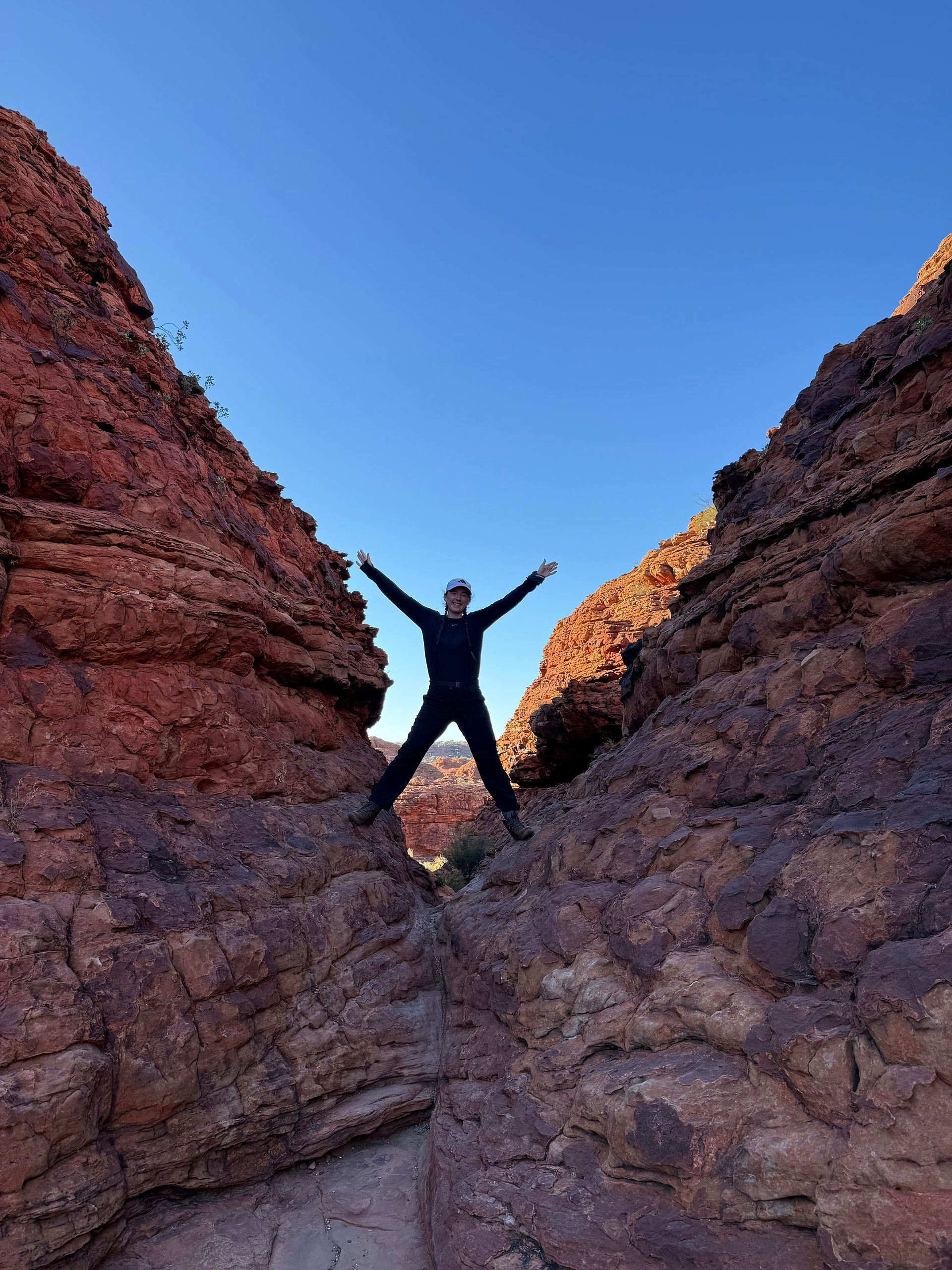

The most serene and unexpected part of the trail was a hidden gorge known as the “Garden of Eden”. We were incredibly fortunate to arrive just as a loud tour group was departing, allowing us to enjoy this beautiful, shaded waterhole oasis all to ourselves in absolute silence. We thoroughly loved every minute of this hike, but we will let the photos speak for themselves.


By the time we finished, our bodies were definitely feeling the strain of getting back into a proper hiking routine. We spent a highly anticipated, relaxing afternoon hiding out at the local pub with a fresh pizza and a couple of cold schooners of beer, playing highly competitive card games in a glorious indoor sanctuary completely away from the bugs. Later that evening, we continued our nightly sunset routine on a viewing deck, this time accompanied by wonderful live music from a resident artist who was based at the canyon for a three-month stint.


The following morning, we treated ourselves to a "sleep-in" until 7:30am, but the flies were already so rampant when we awoke that we swiftly packed up the tent and hit the road toward Alice Springs. After six consecutive nights of camping, we were more than ready for a proper apartment with a washing machine, a full kitchen, and a real mattress. Alice Springs sits right at the absolute centre of Australia and historically gets a bit of a rough reputation in the news, but we were genuinely interested to see this incredibly remote, historic hub for ourselves and slow down our pace for a couple of days.


As we approached the city in the middle of nowhere, we were struck (again) by how green it was! Instead of experiencing the dry Red Centre, we were well and truly still standing in the "Green Centre." Devastating floods had swept through the region just a few months earlier, and while the environment was absolutely loving the extra water supply, it was obvious it wouldn't be long before the harsh climate took over and dried it all up again.
Although we had been warned in advance, arriving in Alice Springs was still quite confronting. It was a shame because the town is surrounded by such breathtaking natural landscapes and has so much potential. Instead, we saw bars covering the shop windows, clear evidence of daylight substance abuse, and heard the distressing sounds of street violence echoing in the distance when we tried to sleep at night. It was a genuinely sad sight to witness.
We were very happy to check into our apartment for the next two nights, especially since it meant we finally had a private washing machine to tackle our laundry. That happiness dimmed slightly when we encountered the largest cockroach we had ever seen right next to our bed. It was easily three times larger than any of the ones we had experienced back in Sydney!
Once we got past the bug shock, we stocked up on supermarket supplies and used the Wi-Fi to catch up on life admin. We even watched the grand finale of Australian Idol, which felt essential after our amazing experience watching the show live in Sydney. We were still coming to terms with Kesha winning the title, but her victory was well deserved. She was so impressive live, especially with her incredible rendition of Miley Cyrus's The Climb.


The next morning, we headed over to the lovely Olive Pink Botanic Garden, which ranked very highly on our Alice Springs bucket list. The garden was founded in 1956 by Olive Pink, an iconic Australian anthropologist, indigenous rights activist, and fierce defender of outback flora/fauna. She was a fascinatingly eccentric trailblazer who campaigned heavily for the local Arrernte people and lived out her later years in a simple iron hut right on these grounds. We arrived just as the gates opened at 8:00 AM and headed straight up the short hill walk. We were immediately greeted by dozens of tiny black-footed rock wallabies hopping along the ridges. They were super cute! We also spotted a family of Euros, which are wallaroos that are noticeably stockier and bigger than the wallabies. We skipped having breakfast at the garden cafe and returned to our apartment to whip up our own big spread. We had a ton of admin to get through to plan our upcoming travel segments and finally get caught up on this blog (we were currently tracking at least a year behind!)
Even though Jelley was feeling a bit fatigued by the afternoon, we motivated ourselves to leave the house when we discovered a neat local festival called Parrtjima taking place. It is a relatively new annual event that runs for ten nights, transforming the desert landscape to celebrate Aboriginal culture, music, and light art. It felt incredibly wholesome, was completely free to enter, and we were so glad we pushed through the tiredness to experience it.


Before leaving town, Saturday rolled around again, which meant it was time for parkrun. Alice Springs had a fantastic local turnout with way more runners than we saw in Coober Pedy. There were easily 100 people at the starting line, and we noticed a large portion of them were medical professionals who had moved out here to work at the local hospital.


Our next destination was the West MacDonnell Ranges, an incredible landscape located right in the middle of absolutely nothing. If we had a 4WD vehicle, we could have connected here directly from Kings Canyon via the unsealed Mereenie Loop road, but we had opted for the paved road drive around. The ancient mountain ridges snaked like 2 giant caterpillars across the flat plains, with the mountains on both sides as we drove. This spectacular region is famous for its dramatic chasms, deep gorges, and cooling swimming holes, which were especially full and vibrant this year thanks to the heavy rains.

First up was Simpsons Gap, a fantastic spot to start our exploration with a short walk leading directly into a massive, rocky split in the mountains. This area also serves as the terminus for the famous Larapinta Trail, an intensive 223 kilometer (139 mile) multi day wilderness trek through the ranges. We crossed paths with a few hikers tackling the trail, but the feedback we heard from them was that a lack of fresh drinking water had been a major hurdle. It made us incredibly thankful to have our own set of wheels to explore the region comfortably.


Next, we drove to Ellery Creek Big Hole, which turned out to be the ultimate desert waterhole. The water was crisp and refreshing, making it the perfect spot for Luke to jump in and take a rewarding dip. It was a beautiful, relaxing, and shaded destination where Jelley enjoyed reading her book for a while before we packed up and continued on our way.


We also made a quick stop at the Ochre Pits, an important cultural site featuring vibrant mineral clay cliffs. For thousands of years, Aboriginal people mined these natural earth pigments, using the varied red, yellow, and white charcoal colours for traditional body decoration, ceremonial art, and rock paintings. Unfortunately, the flies here were simply too relentless for us to truly stand and appreciate the history, so we made it a very brief visit.


When we finally arrived at Ormiston Gorge, we were in total disbelief that such a secluded, pristine natural paradise sat less than a 2 hour drive from Alice Springs. It felt like a complete and welcome contrast to the city. Our pre-assigned campsite turned out to be unsuitable for a tent because the ground was rocky and on a harsh angle. Since the campground was not full yet and the afternoon heat was extreme, we decided to hold off on setting up our tent, hoping we could claim a flatter, more comfortable spot later in the day.


The gorge itself was stunning and serves as a highly popular day trip for locals escaping the Alice Springs heat. We wandered down into the gorge at sunset and found ourselves completely alone, taking in the perfect, still reflections on the water. We sat quietly hoping some local wildlife would wander down to the waterhole for a drink, but we had no luck.
As darkness fell, we cooked up a pasta dinner under the stars while battling mosquitoes, eventually moving our tent to a much better, flatter unoccupied campsite. While we were relaxing, two women walked over to our site for a chat. One was Canadian and the other was Australian, and they shared the amazing story of how they had met years ago while trekking independently on the Annapurna Circuit in Nepal. Since that chance meeting, their families have reunited all over the globe, and they were on a one month road trip together through central Australia. We found it so nice to hear that a chance encounter in Nepal had brought 2 families together like this. One of our favourite parts of travel is meeting random like-minded people and this was a great example.
The Australian woman also explained an interesting detail about why we had not seen much wildlife on our drives lately. She noted that during dry periods, the only green grass available is the thin strip right next to the bitumen highway, which forces kangaroos and emus to graze right by the tarmac. Because of the recent floods, there was plenty of green feed spread deep out into the bush, giving the animals no reason to risk coming near the road.


Because of all that extra water in the ecosystem, the park rangers had posted a warning for the 9 kilometer (5.6 mile) Ormiston Pound Loop track that we wanted to hike the next morning. The alert stated that the trail now required a mandatory swim through deep, freezing water at the very end of the loop to get back. Not overly keen on swimming with all our hiking gear, we opted for a shorter route instead. We hiked up to the main viewing lookout and followed it with the Ghost Gum lookout trail. It turned out to be a great decision, and leaving early allowed us to beat the worst of the daytime heat.


Ironically, by the time we returned to the campsite, we felt hot enough that a swim sounded perfect after all. We plunged into the gorge and enjoyed the water entirely to ourselves, with the sole exception of an elderly local lady quietly setting up her easel to paint the towering red walls.


The dip was so refreshing! As we dried off, groups of other travellers started to arrive. Once a crew of youths turned up and started blasting a song called “Smack That” on a portable loudspeaker, it was our swift cue to get moving.
We had looked at several conflicting maps implying we might be able to loop back to Alice Springs via a town called Hermannsburg entirely on a sealed road. Since many outback routes require a rugged four wheel drive, we decided to risk it and give this route a shot since we had plenty of time. It turned out to be a success.
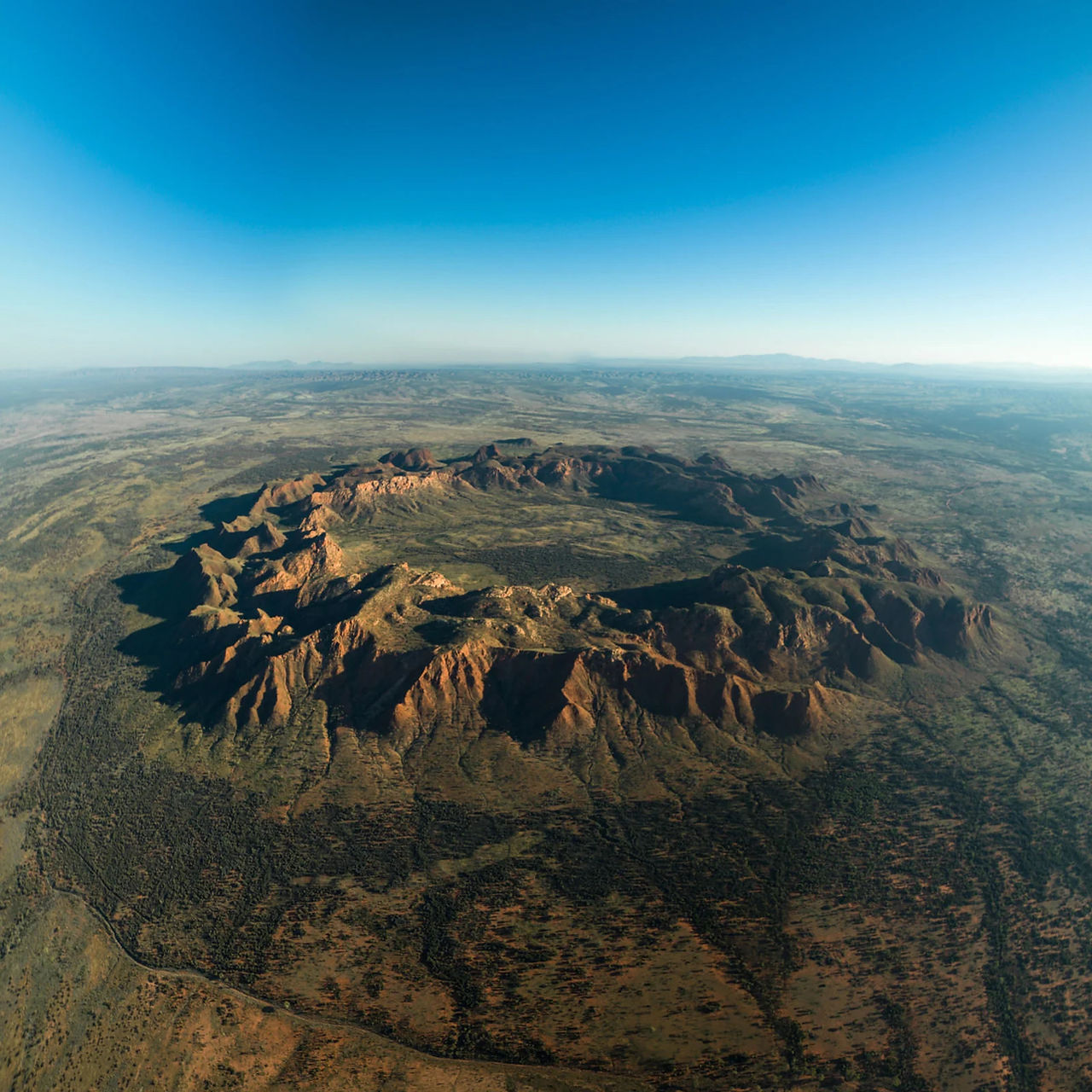
We think it must have been a very recent infrastructure upgrade because the pavement looked relatively new. The drive delivered beautiful views of the ancient ridges, but Luke was especially fascinated by Gosses Bluff Crater. This geological landmark was formed roughly 142 million years ago when a massive comet slammed into the earth, blasting an original crater 20 kilometers (12 miles) wide. Today, a striking 5 kilometer (3 mile) ring of jagged rock walls stands out from the flat plains, representing the eroded remnants of the comets impact.


Knowing that the incredible Indigenous potters we learned about at the Parrtjima festival were from Hermannsburg, we figured the historic town would be a cute, artistic spot to stop for a midday cafe break. Instead, the reality was the exact opposite, feeling a bit like the opening scene of a horror movie. Much like our unsettling observations in Alice Springs, the town was heavily fortified, with high barbed wire fences wrapped tightly around almost every building. It felt largely abandoned. There was no functioning cafe in sight, the local pottery workshop looked like it had been securely locked up for a decade, and the derelict local campground looked incredibly creepy. We decided not to test our luck and did not even leave the safety of our car. Also we were too scared to take any photos.
Town anxieties aside, the rest of the loop drive was absolutely lovely. The open highway gave us a fantastic, sweeping perspective of the West MacDonnell Ranges cutting across the horizon in the distance. We returned to Alice Springs feeling very happy and grateful that we had dedicated those extra days to exploring the gorges and chasms of the spectacular red interior.
We returned to Alice Springs and set up camp at the local Discovery Parks, a chain we had come to love for their consistently excellent facilities. Although the sense of relaxation quickly vanished when we received multiple text messages from the park management at this discovery explicitly reminding us to lock our cars, alongside the direct phone number for the local police just in case. It was a stark reminder of the area's reputation, leaving us on edge for a very light night of sleep.


Directly across the road from the campground sat the Alice Springs Brewing Co. In a stroke of perfect timing, our German friends Naty and Sandra were there celebrating their very last day on the road before flying out of the Red Centre. It was a blast catching up on our respective adventures, and we loved hearing about their rugged four wheel drive experiences. The live music at the venue was tragically bad, but otherwise, the brewery had a fantastic vibe and felt like a genuine hidden treasure in town.
The Germans were incredibly clever with their plan to fly out of Alice Springs. We had taken the more budget-conscious route, choosing to drive the massive distance all the way back to Adelaide to return our rental car and avoid a hefty one-way drop-off surcharge. When booking, we assumed there might be more to see on the return leg, allowing us to split our sightseeing stops across both directions. In reality, there simply wasn't anything new going on along that lonely, long stretch of road.


We woke up early for a massive day of driving all the way back south to Coober Pedy. If we thought we were used to the outback by now, the flies quickly proved us wrong: they were significantly worse than we remembered. In our quest to find something new to see, we pulled into “Crocodile Harry's Underground Nest”, an eccentric subterranean dugout home. It was absolutely yuck, and Jelley felt incredibly uncomfortable within the bizarre, cluttered vibe of the place. Between the eerie dugout and the relentless swarm of flies outside, we quickly sought refuge in a local pizzeria to escape into the air conditioning, a cold beer, and a bite to eat.
For the night, we returned to our familiar underground camping spot. It was reliable, easy, and we knew exactly what to expect. We tried to head out to catch the sunset, but the flies made it absolutely impossible to stand outside. As we prepared for the next leg of driving, we were highly hopeful that the fly situation would finally resolve the closer we got to Adelaide.


As we made our way south, we still hadn’t quite decided where to spend our final five days before leaving Australia. At one stage, exploring the wildlife of Kangaroo Island was high on our list. However, once we discovered that the ferry crossing cost an astronomical $450 one way, that plan was quickly scratched. We realized the diverse regions surrounding Adelaide had a lot to offer anyway, so we decided to boost it back down the same highway we had driven up and then base ourselves in the outer areas of the city.
On the drive down, we made a quick stop in Melrose, a picturesque historic town nestled at the base of Mount Remarkable. Melrose has earned a reputation as a mountain biking mecca, attracting riders from all over the continent to tackle its extensive network of custom trails that weave through the rugged bushland and creek beds. Unfortunately, we had no access or interest in hiking / biking the trails and the fly population was still far too intense for Jelley to enjoy being outdoors, so we only stayed for a single night before continuing our pursuit southward.


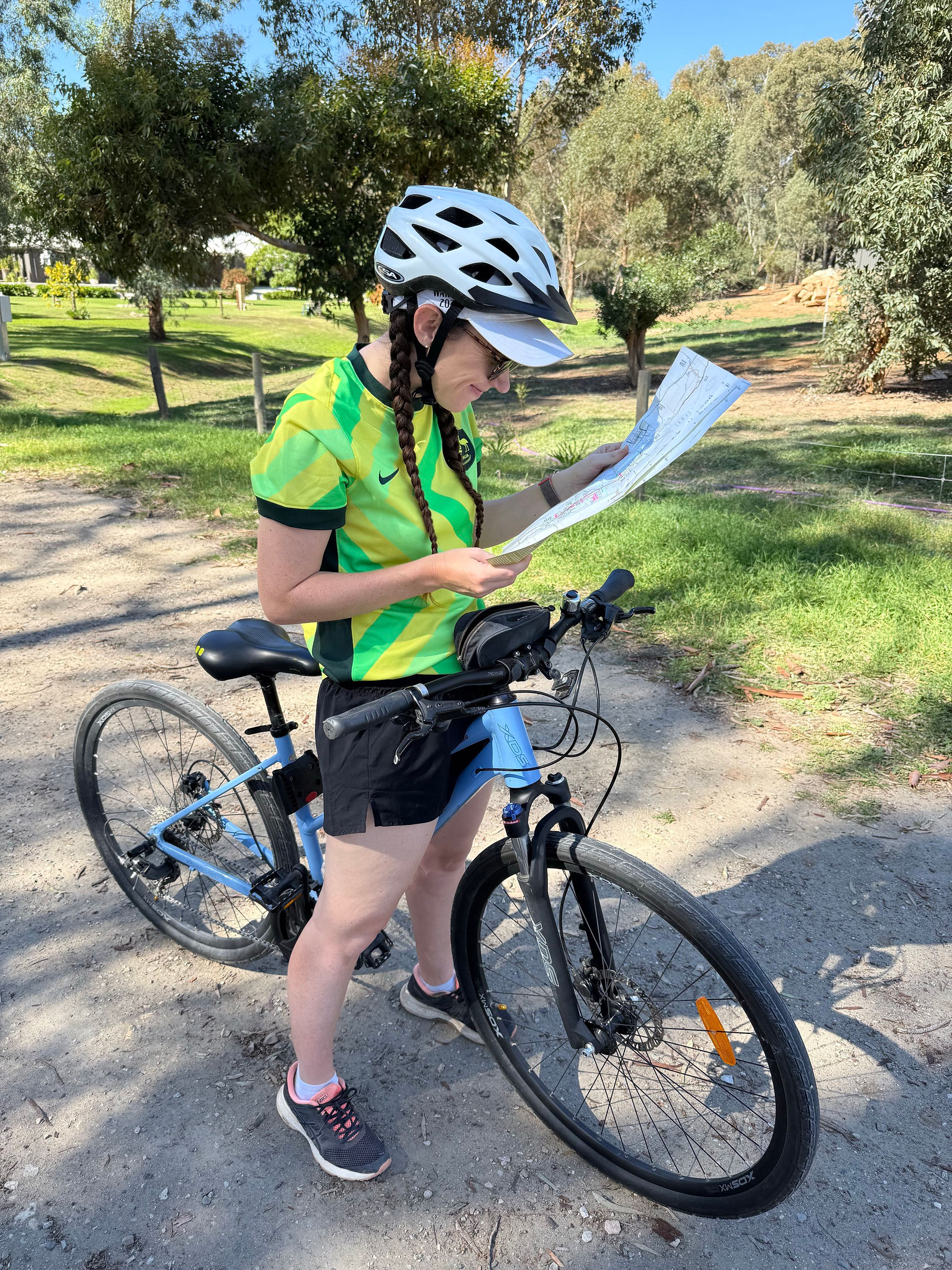
The next day, we made a wonderful spontaneous stop in the famous Clare Valley, where we rented bicycles to cruise along a section of the “Riesling Trail”. The 35 kilometre (22 mile) recreation trail is built along a converted historic railway line, taking cyclists directly through rolling hills, cute towns, and vineyards. We completed a scenic portion of the track and pulled over at a lovely family owned winery called Mitchell Wines for a quick tasting. It was fantastic to chat with the staff and learn about their traditional, estate grown winemaking process. Interestingly, they mentioned they were currently experiencing a tough drought and that water was sparse. We found that pretty hard to believe considering how vibrant and green the entire desert center of the country had looked on our drive down!




Finally, we arrived back in civilisation again in Adelaide, and our biggest victory was immediately clear: there were no flies! It suddenly felt like the only habitable part of Australia. Going from the profound isolation of the outback to a bustling metropolitan area brought on a bit of instant culture shock. It felt strange to experience that sudden shift after two weeks of total environmental deprivation in the Red Centre, but we were mostly just relieved to walk around outside without being constantly assaulted by bugs.
We checked into a lovely little Airbnb located right by the ocean near a beautiful beachside spot. We had deeply missed the fresh ocean air! We spent our first evening wandering along the vibrant waterfront and enjoying a peaceful sunset dip in the sea, feeling incredibly content to be back on the coast.


The next day, we headed up into the Adelaide Hills to visit the Mount Lofty Botanic Garden. Situated about 25 minutes east of the city centre, the garden is famous for its cool climate plant collections. It was wonderful to wander the trails and see the autumn colors starting to turn, with rich red, orange, and yellow leaves on the ground. After spending the last couple of weeks in such a barren, dusty desert landscape, it felt like a luxury to walk amongst lush green grass, dense ferns, and colourful trees.


After exploring the gardens, we drove up to the Mount Lofty Summit lookout. The peak provided a stunning, sweeping perspective of the entire Adelaide city skyline stretching all the way to the coast. It was the perfect spot to sit and take in just how far we had come on our journey.
We then made our way to Belair National Park, which is situated just on the beautiful southern outskirts of Adelaide. We stayed right inside the park boundaries at a lovely holiday park, upgrading ourselves to a cozy glamping tent. With our own private shower, a TV, and a fridge, it hardly felt like camping, but it was warm, comfortable, and a very welcome change of pace. Jelley found this exact spot because the local parkrun started right inside the national park grounds the very next morning!


Belair is a lovely national park, boasting a massive network of forested trails to wander through. As we explored, we were treated to wild kangaroos grazing peacefully on the grassy clearings everywhere we looked. We had heard a few rumours that you could occasionally spot koalas sleeping high up in the gum trees around dusk, but unfortunately, we didn't quite get that lucky this time around.
The next morning, we woke up early and jumped straight into another fun parkrun, enjoying the beautiful forest scenery of Belair as we got our legs moving. We also recalled that our great friends Mark and Michelle, who we worked with during the FIFA Women’s World Cup back in 2023, were now living in Adelaide. We reached out and they ended up joining us for the parkrun, which made the morning even better.


After crossing the finish line, we all sat down for a lovely cuppa together to catch up. Later on, Luke headed out with them to try a virtual reality laser tag arena, which ended up being quite fun. It was great to reconnect, laugh, and swap our latest major event and travel stories after so much time apart.
Our very last stop on this epic Aussie road trip was the historic town of Hahndorf, nestled in the Adelaide Hills. Settled in 1839 by Lutheran migrants fleeing religious persecution, it is officially recognised as Australia's oldest surviving German settlement. Walking past the traditional timber-framed buildings felt delightfully out of place in the middle of South Australia, but it was very nostalgic to wander the streets and instantly transport ourselves back to our days of when we lived in Frankfurt, Germany.


Naturally, we had to stop and treat ourselves to some delicious, authentic German bakery goods before making our way back to the city to return our trusted rental car and finally reunite with our giant suitcases.
Reflecting on the last few weeks, we felt an immense sense of gratitude as we packed up our gear. We had driven over 6,000 kilometers (more than 3,700 miles) through some of the most remote, harsh, and spectacularly beautiful landscapes. From underground opal mines and towering ancient monoliths to hidden desert oases and lush coastal hills, this road trip showed us a side of Australia we will surely never forget.
We are excited to head home to New Zealand for a super short family visit before setting off on our next big international adventure!
Until Then,
- A Kiwi and A Cali


Comments