


Updated: Apr 1

Our journey to Jiri began with a 3.45am alarm and a taxi to a bus ‘station’ on the outskirts of Kathmandu. There were three potential locations on Google Maps, and the taxi dropped us off at one with multiple buses and people milling around in the dark. After some confusion, a local man walked us 300m across the highway and down to a ticket office at what also looked to be a bus station. Tickets now in hand, we sat down and tried to order either coffee, or hot water to make a coffee, but were presented with what was the sweetest and worst cup of tea in our lives. At 20 Nepalese Rupees (15 cents US), there were no complaints to be had. The confusion continued post-cuppa, as we were then walked back to the original bus station and loaded on a bus.
We had heard horror stories about this particular bus journey, and were prepared for up to 12 hours on the road. Remarkably, this was one of the best bus trips of our time in Nepal, with comfortable seats and we were genuinely shocked at the condition of the road, which was paved for the entire 184km. We arrived in a record 6.5 hours! It was nice to be on a different road than the dreaded Kathmandu to Pokhara route, and to see different scenery along the way. We were treated to epic mountain views above cloud filled valleys as the sun rose, and it made us even more excited for the adventure ahead of us.
We got chatting to the two other foreigners on the bus, a Polish guy and a Spanish guy. The Pole was returning to Nepal for his second trekking trip, and had many interesting stories to share about his job working in the casino on cruise ships around the world. The Spaniard had never really been trekking long distance before, and had left his wife and kids at home to embark on a one month journey in the Everest region. Both of them were intending on trekking from Jiri to Namche, then continuing on to the advanced 3 Passes Trek. Our plan was slightly different, as we planned to hike from Jiri to Namche with a detour to Pikey Peak, then heading up to Gokyo Lakes and potentially crossing just one mountain pass on the return journey. The following map illustrates the first half of our 22 day alpine adventure!
Jiri was a cute town to explore and stretch our legs after arriving, and happened to be hosting the regional volleyball championships while we were there. All of the surrounding schools students were in town to be part of the action, and we enjoyed meeting some of the locals and watching the talented athletes. Apparently volleyball is the most popular sport in the Himalayas, with many of the mountainous villages lacking the flat ground for a soccer field, but they always had enough space for a volleyball court.
While we could have started trekking today, we decided to take it easy and spend the afternoon in Jiri before setting out in the morning. We popped down to a local ‘park’ with a Sir Edmund Hillary & Tenzing Norgay statue, which was fitting as we would be continuing in their footsteps over the coming weeks. Jiri was the traditional starting point for all trekkers heading to the Everest region, right up until the airport in Lukla was built, and more recently several other road links to Phaplu and Salleri, which had resulted in trekker numbers from the town reducing to just single digits weekly in the peak season. We had a feeling we would be spending much of the next 10 days alone with just each other's company.
Day 1: Jiri to Deurali - 22km (13.6mi)
The next morning, we woke to the news of the huge earthquake overnight in Western Nepal, the devastating 5.7 quake killing over 150 Nepalese and causing huge damage across mostly remote villages. We knew we wouldn’t have reliable internet access throughout this trek, and hastily informed our parents that we were indeed in a different part of the country and didn’t feel a thing in the night.
We set off hiking through a pretty pine forest, very happy to be walking in nature again after our time in the hustle of Kathmandu. The Pole and Spaniard had left before us this morning, but we soon caught up and walked part of the trail together. We crossed paths with a chatty American man who was right at the end of his 5 week journey in the region, and had been coming to Nepal annually for nearly 30 years. A really interesting guy with some great advice for our journey ahead.
We arrived in a picturesque riverside town called Shivalaya just before 11am, a little early for lunch but decided to refuel as we were quite hungry and the teahouses here looked inviting. A friendly host told us how he moved from Jiri to Shivalaya 15 years ago, when business was booming with trekkers and set up his teahouse here. Now he was lucky to meet 1 or 2 people each day during the peak season, and mostly blamed road construction heading deeper into the region (courtesy of a dam project). Before we left town, we had to stop at the Gaurishankar Conservation Area permit office, where we had to buy a severely over-priced permit for the next 1.5 hours of trail, that would not be checked at all. This next part of the trail that we had bought a permit for was also the worst-maintained section during our entire time in the region, sadly with trash absolutely everywhere, no signage or clear trail markers, and we frustratingly got lost multiple times, ending up in farmers backyards.
It was a huge climb with steep steps, and we had thought this day would be only 16km. It transpired to be 22km, and we were exhausted by the end of it. During our lunch stop, we had noticed the clouds rolling in and wondered if it might rain. Despite every local we asked insisting there was no chance of rain as the rainy season was definitely over, sure enough, when we were tired and praying for the top of the hill and our home for the night, big raindrops started to fall. In hindsight, we realised this was actually the last time we experienced rain in 2023, it was been extremely dry since this day!
We were relieved to eventually arrive in Deurali, and picked the first teahouse with smoke coming out of the chimney. We were keen for a hot fireplace to dry off. Our trekking companions were also at this teahouse (there were only 3 in town!), but they had skipped a lunch break, arriving before the rain. A hot shower was very welcomed after the long day - the boiling bucket of water with a scoop worked surprisingly well. It was noticeably cooler here, we had ascended from 1,900m to 2,716m today, but with 1,450m elevation gain throughout the day. No wonder we were tired!
A teenage girl was running the show at our teahouse. She was from this village, but attending high school in Kathmandu, and just visiting her family during the one month holiday over the festival season. Her English was excellent (the best we had experienced during our time in Nepal!) and her goal after high school was to study business management. We have no doubt she will be very successful. Her and her younger brother live in an apartment by themselves in the capital city while attending school, and her maturity and independence was pronounced. Equally as impressive was her Grandma, aged 92, still cooking in the kitchen and living in this remote village.
Day 2: Deurali to Chimbu - 19km (11.8mi)
We were sad to farewell this friendly and welcoming family, but had to hit the trail again for what we knew would be another big day ahead. We anticipated a 7 hour hike with 1,000m in elevation gain today.
We took a wrong turn early on - the trail we took was surprisingly well maintained, and it was such a shame it was going the wrong way! We returned uphill back to the correct route, which descended steeply to the town of Bhandar. We walked through small village farmhouses , detouring around the newly rebuilt town centre (following suffering severe damage in the 2015 earthquake). We came across more chatty villagers and a pretty monastery. We tried to find the upper route as mentioned in our Lonely Planet notes, but insistent locals convinced us to take the dirt road instead. The ‘Trekking in Nepal’ Lonely Planet book on our kindle had served us really well with accurate daily trail notes and elevation profiles when on the Annapurna Circuit, but unfortunately the chapter on this section of Nepal had not been updated since before the 2015 earthquakes, which had a huge impact on the region. Many of the notes suggested ‘there may or may not be a trail’ or ‘may or may not be a guesthouse’ along much of the trek from Jiri, and we had struggled to find updated information online before setting out, so we knew it would be a bit of a challenge.
There was a near-constant stream of planes and helicopters overhead travelling between Kathmandu and Lukla - we counted no less than 20 before 10am. On the higher parts of the trail, it felt like we were at the same height as them, and as we continued on this journey we would soon see them far below in the valleys below us as we crossed high passes.
We enjoyed a lunch stop in a lovely town called Kinja - and stayed here for nearly 2 hours! The fried rice was filled with vegetables from their garden, and the potato & cheese momos melted in our mouths. Jelley didn’t realise until now how sore and blistered her toes still were from the previous long descent from Thorong La Pass in the Annapurnas, and wearing boots again during steep downhill sections was exacerbating the pain. The elevation profile of these first few days was brutal - instead of walking through valleys, we would walk up one side, over a saddle or pass, then all the way down to the valley to then walk back up again. Walking 20+ km per day after a few weeks off our feet suddenly didn’t seem like such a great idea.
It would be a super steep up track to Sete, our intended destination, so over our extended lunch break we quickly devised a new plan to conclude the day in Chimbu, 1 hour earlier. This ‘village’ was so small it didn’t even appear on our map! We read in our semi-reliable Lonely Planet notes that there was one basic teahouse in this village, and we were hopeful it was still there. It was definitely basic, and we’re not sure if anyone had stayed there for several years, but the family were happy to host us and we were happy to take our packs off for the night. The beds felt like sleeping on a wooden plank, and the only toilet was downstairs, outside and along a path. Jelley made a mental note not to hydrate too much before bed so she didn’t have to go for a walk in the night! Stopping here also had the added perk that we probably wouldn’t run into the Pole and the Spaniard again on our hike - they weren’t quite our vibe for hiking companions.
Luke’s description of our teahouse was ‘the perfect combination of cute and filthy’. It was the most basic place we had stayed, and made us feel very grateful for our usual standard of living. The family had 7 kids, 4 of them still living at home and the rest working in Kathmandu. We played a game of Quiddler, and just as Jelley was about to seal the win, the children came over to hijack the game. They had a lot of fun as they started spelling out the English words they knew from school with the cards, like ‘orange’, and their names. It soon transformed into a game of putting the cards in alphabetical order. We thought there was only way to use this set of cards but we had been proven wrong! The games continued long after the sun set.
Our classic Dal Baht for dinner was prepared over a woodfired oven, and the cooking method was impressive. This was a super local experience, and we were overall very grateful to have stopped here.
Day 3: Chimbu to Goyam - 9.2km (5.7mi)
We both had a rough night’s sleep on the very firm wooden plank. Jelley’s back was in a lot of pain, along with her toes, so Luke took more of the load for the day and carried our water supply. We mutually agreed upon a shorter day today, realising we actually had no need to be walking 20km (12.5 mi) / day this early in the trail, and didn’t want to burn out before we got to the decent elevations!
It must have been foggy up in Lukla, as the flight traffic above didn’t start until 10.30am today. We had another steep uphill walk this morning, with over 1,000m (3,200ft) of elevation gain again. We were feeling lethargic, and very hopeful there was at least one teahouse open in Goyam for us to stay for the night. We were very grateful to arrive at Tashi Delek ‘lodge and restaurant’, the only teahouse of 7 which survived the earthquakes and covid pandemic. We reached it by lunchtime, and were happy to chill for the afternoon - quite literally, as it was even cooler up here!
When we mentioned living in New Zealand to the owner, he proudly showed us a photo on his wall of the time he met Sir Edmund Hilary when he was just 14 years old. He attended a high school that Sir Ed built in nearby town Junbesi, one of 27 schools he built across the Everest region, and referred to him as ‘the godfather’ of the Sherpa people. He was glowing as he shared these stories, and this wasn’t the last time we heard of the incredible impact our Kiwi legend had had on the people of this region.
This teahouse also had a traditional wood-fired oven, but was in much tidier shape than our last stay. There was a cute common area to relax in, complete with a couple of snuggly cats, and our hosts were really open to talking and sharing their lives here with us. Goyam previously had 7 teahouses, as referenced in our trusty guidebook, but with the damage from the earthquake, impact of covid border closures and lower trekker numbers in recent years, only Tashi Delek had decided to remain. They had been running this teahouse for 27 years, but no natural disaster or global pandemic was going to close them down. Although lonely without their neighbours, they knew they lived in a piece of paradise and it would always be home to them. Their 4 daughters all live outside of Nepal, working in Japan, Portugal, Cyprus and Turkey, and 2 sons live in Kathmandu. The youngest son was visiting during his break from university to help restock firewood for the long and cold winter ahead. We were their only guests in a week.
The sign on the outside of the teahouse indicated it was also a ‘cheese shop’, and we were stoked to find out they had yak cheese for sale! We were quickly corrected, as it is actually NAK cheese not yak cheese, as ‘nak’ is the female name of the giant animals. Nak cheese or yak cheese, it was a yummy snack and reminded us of our first time trying it in the Annapurnas.
We were at 3,220 metres and really feeling the cold! This extra hiking section was great for acclimatisation for our time at higher elevations over the next few weeks, even if we were a little envious at times of the planes flying overhead carrying trekkers straight to Lukla airport. So long as we didn’t totally burn out or get injured on this extended walk in, we reminded ourselves it would be all worth it! We were happy with this decision to make our days a little shorter, and also loving this opportunity to really get to know locals and their lives along the way too.
Day 4: Goyam to Jase Bhanjyang - 9.2km (5.7mi)
We woke to a frost this morning, and didn’t follow our usual mantra of ‘be bold, start cold’, instead wearing all of our warm layers as we started out in the shade. We continued through the former settlement of Goyam, passed the other teahouses that didn't get rebuilt after the earthquakes.
Our host had kindly hand-drawn a map for the day, as we would be taking our slight detour to go to another tiny settlement of Jase Bhanyjyang, to spend the night before attempting to hike up Pikey Peak for sunrise the next day.
We were now above the helicopters and planes flying by, as they flew through the gaps of the valley below. It was crazy to experience, and when they did get close we had to hold onto our hats! We were happy to be walking completely by ourselves on the isolated trail .. that was until we saw fresh bear prints !!! We stuck close together and played some loud music, anxious every time we heard a rustling in the trees.
Following our trusty hand-drawn map, sure enough we located the turn-off towards Pikey Peak. The views were stunning from this section, as the forest opened up to tussocks, and the trail turned into the best condition we had encountered on the journey so far! We reached a junction with huge stone steps, and identified the turning point for the next day to avoid retracing our steps to rejoin the main trail. After a brief break to take in our surroundings, we descended to the tiny ‘town’, which also doesn’t feature on any maps. Our home for the night was Pikey Everest lodge, run by the nephew of the teahouse from the night before in Goyam. It was super cute, and we were relieved to have a more comfortable mattress than the previous 2 nights.
It had been another short day hiking, and we were super happy with this decision to give our bodies time to readjust. We had also reached a decent elevation of 3,550 metres (11,646ft), which was hard to believe just 4 days ago we had started at 1,905m (6,250ft) in Jiri. It took a week to reach a similar height on our Annapurna trek.
It was nice to come across other hikers tonight, as we shared the teahouse with a father and son who were completing a different circuit from the other side of Pikey Peak. They were from Birmingham UK (where we had lived last year!), and the son had just finished living in New Zealand for 3 months on a military exchange placement. The father, a recently retired schoolteacher, recounted stories of working in NZ in his youth, from picking kiwifruit in Tauranga to helping fix up a sail boat then crewing it halfway around the world. The afternoon flew by as we had many tales to share.
We went to bed early in preparation for a big day ahead - our goal was to reach Pikey Peak for sunrise, then continue back to the main trail to walk through to Junbesi. The Brits had been up Pikey Peak that morning, and told us how incredible their sunrise was, and we were very hopeful for clear conditions in the morning.
Day 5: Jase Bhanjyang to Pikey Peak to Junbesi - 20km (12.4mi)
Our alarm went off at 4.15am, and we rugged up in our warmest clothing before walking up the nearby peak. Jelley was particularly tired and anxious - unlike our other early sunrise missions with our German crew in the Annapurna region, we were entirely alone in the dark on this trail, and seeing the bear footprints the day before had us a little on edge. After being spooked by a group of 20 cows sleeping, we heard a rustle behind us. It was just a black dog keen to join us for the walk.
It was a steady climb up the frosty mountainside to Pikey Peak, 4,070m (13,353ft). As dawn came upon us and the light increased, we looked back to incredible views over the Himalayan mountains. There was a small group of Nepalese guys at the summit already - they were the sheriff, prosecutor and judge from a nearby town and very interesting to talk to while we tried to keep warm before the sun eventually rose in the distance. There was also a 2nd summit of Pikey Peak a few kilometres away, which looked a little more crowded with 20-30 people there who had likely stayed at the base camp on the other side of the mountain.
It was a magical sunrise, and bitterly cold at the summit. The views stretched for miles. This was rumored to be one of Sir Edmund Hillary’s favourite views in Nepal, and we could see why. It was a worthy detour to our journey in the region, and went straight to the top of Luke’s ‘favourite walks ever list’. (Spoiler alert - its position on the ‘favourite walks ever’ was replaced later in this trek!!).
We returned to our teahouse to pick up our packs and breakfast, before continuing on to Junbesi. After two reasonably short days to rebuild our hiking fitness, it was back to the regular ~20km days. The black dog had followed us all the way to Pikey Peak and return, and started to continue along the trail to Junbesi with us. We tried to encourage her to return back to Jase Bhanjyang, but she insisted on walking with us. It wasn’t clear where her home actually was, but she was immediately loyal to us and it was nice to have some company.
The track we took today also didn’t appear on any maps, and seemed to be a new addition to the area. It was in really good condition, and certainly made the 2,700m (8,850ft) steady descent a little easier on the knees. The scenery was also lovely, through beautiful pine forest and really unlike any of the various landscapes we had seen in Nepal so far.
We were exhausted when we eventually reached Junbesi, and super pleased to have our first hot shower in 4 days !! This teahouse was Luke’s favourite, in a large wooden house akin to a ski chalet. The common area was well established with a cute setup - the short tables forced all guests to face inwards to both the fireplace and each other. It was also the busiest of our trek so far (although still only 10 guests and nothing compared to what we would experience once we joined the trail with trekkers flying into Lukla). We had a few treats while here, including an apple pie and a new variety of momos - cheese and tomato! It was just like a cheese toastie, but in dumplings style, and was a familiar taste of home. It was our first time on the trail having something other than dal baht.
The town of Junbesi was quaint, and would not have looked out of place in the European countryside. It was home to one of Edmund Hillary’s many schools in the region. This school was built in 2020, but 2020 based on the Nepalese calendar, so actually 60 years ago! Confusing. This was where our Goyam host had gone to school and met Sir Ed as a teen. They were building a new classroom during the holiday break, and the town was also home to a brand new community library complete with a computer lab.
The dog had followed us the whole way here, and made herself at home in our teahouse. The owners weren’t too impressed as she curled up in front of the fire in the dining area. Just before we went to bed, we heard her whimpering outside our bedroom door. Luke couldn’t help it but to go and spend time with her, and give her some peanuts before her night in the cold.
Day 6: Junbesi to Ringmu - 15.5km (9.6mi)
We were running low on clean clothes, but not keen on paying $1 per item of clothing for the teahouse to do it for us. Luke flipped the gender roles on their head, and got to work with a bucket of ice cold water and a bar of soap to wash our essential small items before we hit the trail. He really learnt to appreciate the technological advancements of a washing machine, and will never take it for granted in the future!
Jelley stayed warm inside, and got talking to a super interesting Hungarian couple who had met each other later in life and had a shared love of travel and hiking. The wife had moved from Hungary to Venezuela with her family as a teenager to escape the oppressive communist regime, leaving everything behind in her homeland for a fresh start. Then, in 2017, she returned to Hungary from Venezuela for the exact same reason, leaving all of her belongings behind in South America. It was always interesting meeting people who had lived through the events we had only read about in history books.
We considered taking a ‘zero day’ and resting in Junbesi, but instead decided to continue on and walk shorter distances over the next few days instead. Our revised destination for the night was Ringmu, just 11km (6.8mi) away. Lonely Planet described this section of the walk ‘with scenes like a Milka wrapper’ (a reference to the European chocolate brand) and we did not disagree as we meandered through more pine forest and enjoyed the countryside feel to the track. We observed local villagers using the traditional farming methods of an ox and hand labour ploughing the fields, and it felt like we had gone back in time. Hardcore! It was also really refreshing to walk along a flat path with no elevation gain or loss for a bit for the first time since we began in Jiri! The trail was now well-formed and signposted, and although we ended up walking 15km (9.3mi) in the end, it was starting to feel a little bit easier as we found our rhythm.
Ringmu was another small town, and we thought it might be a little bit busier with trekkers as it was the first town for those starting from the road end of Salleri, another more recent alternative starting point for the region. We were surprised to only cross one person who had started from here. Everyone really must just take the flight straight up to Lukla!
Our host for the night was a 32 year old woman with an 11 month old baby. While both she and her husband are teachers at the local school, her husband is also a guide and was away on a 3 week trip. They really summed up the hardworking nature of Nepalese people we continually experienced during our time here. A jeep arrived in town shortly after we arrived, and we watched her baby as she went to buy provisions.
We enjoyed a delicious soup with vegetables from her garden, followed by the best handmade momos of our whole trip! This lady was a superwoman with many talents as a host, chef mother, teacher and farmer. She lit the fire for us in the common area, and we were super grateful for her kind hospitality for us as her only guests. Jelley enjoyed a hot shower for the second day in a row, and we enjoyed a relaxed afternoon playing games, keeping warm and planning the route for our next few days. While these teahouses often had a common room with a fireplace, the way they were designed always had the bedrooms in a separate building with no heating at all, and our sleeping bags were used every single night of this trip as winter grew closer and we hiked higher.
The superwoman’s sister popped in to help her out and visit us, and it was interesting to learn about her profession working at the local healthcare clinic, which we had seen the sign for as we entered the town. French and German donors fund this health outpost, paying the salaries of 3 local staff working there, providing free medicine to the community, and education scholarships for the local children every year. The donors were scheduled to visit on their annual 2 day stay the next week, before continuing on to their next outpost in the region. It was inspiring to see effective altruism at work, with a real impact on this remote community.
We called it a night early once again, with a plan to get to a nearby viewpoint at Taksindu La
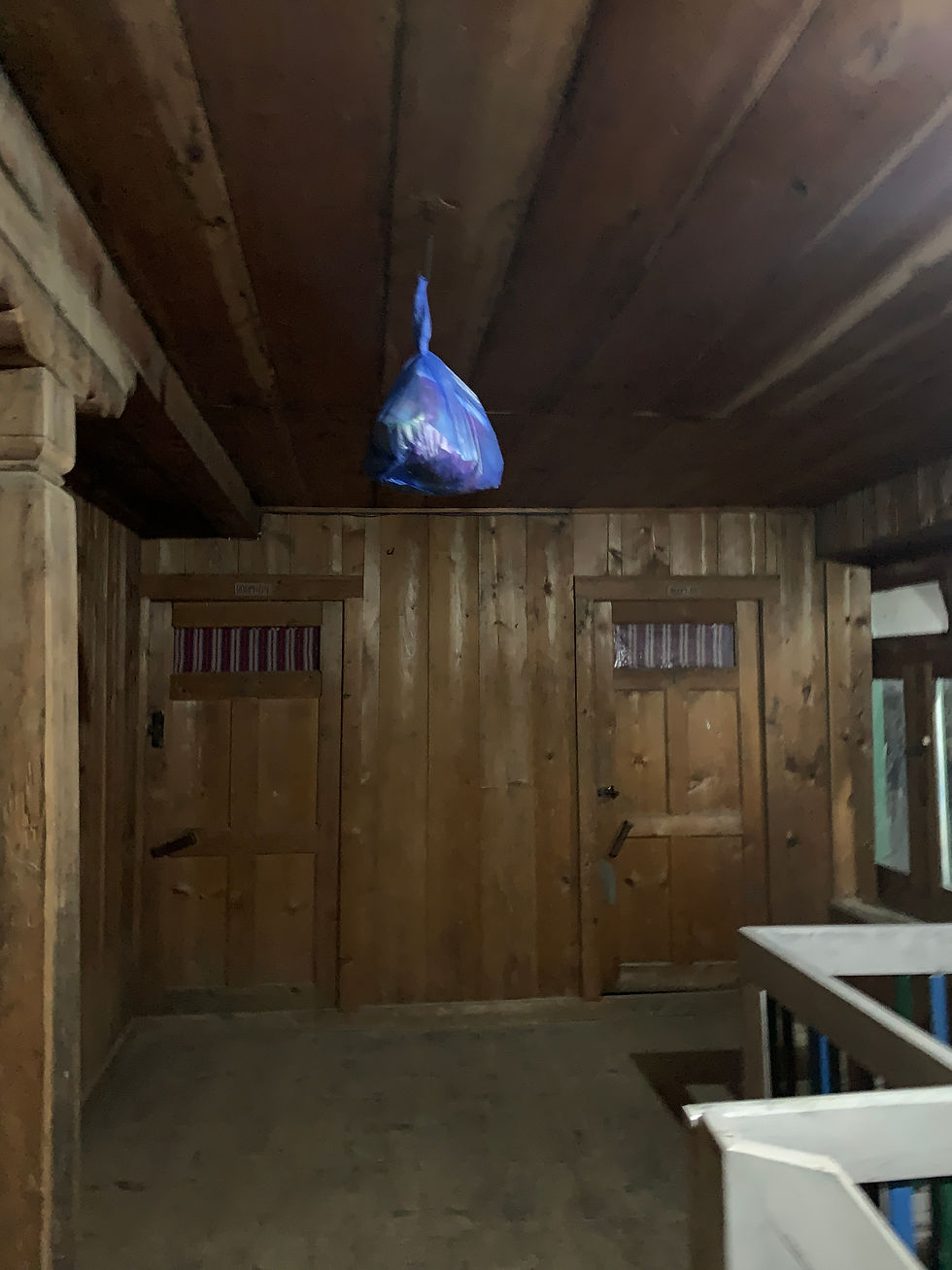
pass for sunrise in the morning. It was as quiet as a mouse when we went to sleep. Almost too quiet. We woke a few hours later to our snacks bag rustling, and turned on our torches to see a real mouse searching for a late night treat! Luke bravely picked up the bag and hung it on a hook outside our room, and we convinced ourselves to go back to sleep again. Alas, several hours later we woke up to the noise of our friend running around our room, this time along the window and very close to Luke’s head! There were so many gaps in the walls, and there was no way of plugging them. Eventually we moved to a different room, and managed to get a few more hours of sleep.
Day 7: Ringmu to Kharikola - 21.3km (13.2mi)
With such a disruptive night, we changed our early morning alarm and scratched the idea of getting up at 4.30am to watch the sunrise from the pass. We instead set off at 7am in daylight, to arrive at the viewpoint just before 8am. We enjoyed a gorgeous panorama of the Himalayas from a cute teahouse with a view and had breakfast and coffee in Taksindu, not too disappointed at missing the sunrise. Pikey Peak was enough for us.
There was a huge Buddhist monastery in this village, and it took some motivation to keep moving again. This was a sweet spot we could’ve easily chilled out at for the day. While the trail was pretty, it was another really long descent today which was tough on Jelley’s toes. It was a little disheartening to be losing much of the elevation we had gained, knowing we would just have to walk back up it all again. It was noticeably warmer as we got lower, and we were soon pestered by flies and bugs. We had a couple of unexpected wildlife encounters though, with monkeys above us, followed by two yellow-throated marten running across the trail in front of us!
We planned to stay in Jubing, another random village on the map, but didn’t get a great vibe when we arrived. We viewed one teahouse, but it gave us flashbacks from our rickety teahouse with the mouse the night before, plus the toilet was outside with no hot shower, so we decided to continue on and walk for another hour uphill. It turned into a bigger day than we expected, and while we didn’t stop for lunch, we did treat ourselves to a couple of chocolate bars to give us the energy to reach the next town.
Luke selected the Hilltop Guest House just as we reached the top of the climb, which was located right next to a beautiful monastery offering lovely views of the valley on both sides. After some fries and momos for lunch, with homemade salsa (yum!), we settled in for the night, very grateful to have continued to a more comfortable home than settling down in Jubing. Two young American girls joined us here for the night, who had recently graduated from college at Cal and finished their first summer as trekking guides for a well-known agency called Backroads.
Day 8: Kharikola to Puiya - 15.8km (9.8mi)
Although our boots looked like they might be starting to fall apart, our legs were feeling good as we set out on day 8. We walked through several small villages today, with lots of cute kids who would put their hands together in the praying position and say ‘Namaste’ as we passed. Today was a grueling uphill, with 1,300m (4,265ft) gained , but we didn’t think it would take too long. Cruelly, just as we saw our destination of Puiya across the valley, the road access suddenly ended due to landslide and we had to take a long and steep detour on a muddy narrow trail, sharing the track with caravans of mules and horses transporting goods in both directions. It was a tedious addition to the day, and we were happy to finally reach Puiya. Luke compared the area to Milford Sounds as the clouds rolled into the valley in the afternoon, with a mysterious feel to the scenes around us.
We were counting down the kilometres until we reached Namche Bazaar for a break from hiking - just 3 more nights! We were so close, yet it still felt so far. We were, however, nearly at the junction with the trail to join the masses who had been on the constant planes and helicopters flying over us during the past week starting their trek from Lukla.
We were the only guests at our accommodation again tonight, and although we had enjoyed both the solitude and getting to know local families along the way, we were looking forward to a few more comforts of being in a tourist town and socialising again in a few days.
Our host tonight was a gentle older man whose wife had died 2 years ago, so it was just him living here with a local lady helping to cook meals. His children had also left the country for education and work opportunities; a common story among the villages we passed through. His father had been a gurkha soldier which was interesting to learn more about, and it was evident how differently the past 3 generations had lived in these small mountain towns.
Day 9: Puiya to Ghat - 18.4km (11.4mi)
We set off enthusiastically this morning, excited to be one step closer to Namche! The horse & mule highway continued - it was good preparation for the human highway ahead of us. We took a trail to bypass Lukla, with no need to visit the busier airport transit hub, and eventually connected with the main trail. We had spotted an attractive coffee shop on the map, and treated ourselves to a real coffee (at NZ prices!) with a brownie, and a well-deserved break. It was intimidating suddenly being surrounded by large groups of fresh, clean trekkers and we weren’t sure we even knew how to hold a conversation with so many people after our time in comparative isolation.
After our treats, we continued walking another hour along the well formed trail , keen to find a stop for the night in between the tour group towns. Some of these towns were so developed, they even had Irish pubs!! We hit the jackpot with our chosen teahouse in Ghat, and it felt like a total upgrade from our previous accommodations. We had a huge room with carpet on the floor, sunny, extremely clean and modern, and it was no more expensive than our previous teahouses. It was refreshing to feel comfortable again, and we slept extremely well.
Day 10: Ghat to Namche Bazaar - 16.5km (10.2mi)
We started early today, but perhaps not early enough! We had a blissful 30 minutes on the wide, well maintained trail to ourselves, before catching up to the larger groups in Phakding. We set a cracking pace, craving the familiarity of solitude from the previous days, and before we knew it, we had made it to the entrance of Sagamartha National Park! We had intended on stopping in Monjo today, and trekking to Namche the next day, but we were feeling so good we decided to continue on with the temptation of woodfired pizza and bakeries a day earlier.
After getting our trekking permits in order, we felt the immediate serenity as we entered the national park. It was truly gorgeous, and we could finally start to see the peaks of mountains far in the distance. We stopped in Monjo at the teahouse we planned to stay the night, and enjoyed an incredible apple pie with custard for morning tea in the lovely sunny garden. It was only 10am, which solidified our decision to continue on with newfound energy with the 1,000m (3,280ft) ascent to Namche Bazaar.
We soon reached Hillary Bridge - a terrifying suspension bridge which was the only way to get over a canyon and river far below. This bridge was used not only by trekkers in each direction, but also by the horses and yaks that carried all of the food, drinks and building supplies from Lukla airport up to Namche Bazaar. It was incredible to see the loads these animals were carrying, along with the porters, who made us never want to complain about the weight of our packs ever again. Apparently conditions for porters have improved significantly over the past decade, with regulations around pay and the maximum weight allowed to be carried, but whether these regulations have been enforced or not remains to be known.
After a slow and steep afternoon, we felt huge relief at reaching Namche Bazaar! We couldn’t believe it, and had been talking about this town for months! It felt surreal, and we had walked 166km (103mi) to reach this point. Jelley had booked an amazing guest house for $10 a night with million dollar views on the sunny side of the town, and we were happy to be home for the next 3 nights. The accommodation was run by the son of the only surviving Sherpa to accompany Sir Edmund Hillary on the successful first ascent of Mt Everest.
We went straight to a bakery to blow our budget on cinnamon rolls, cheese bread and coffees, reflecting on our accomplishment as we marveled at how on earth they transported the commercial sized bakery ovens up here at 3,440m (11,286ft). The town was filled with stores containing anything and everything you could imagine. It was such a contrast from the simple life we had lived for the past 10 days.
Day 11: Rest Day in Namche Bazaar - 4.5km (2.8mi)
It was finally time for our first REST DAY! We still woke up right on schedule at 6.30am, but stayed in bed a little longer than usual, admiring the view from the warmth of our bed as the sun rose over the mountains.
We were desperate to do more laundry and had been saving it up until reaching Namche, but $1.50 per item of clothing was the going rate in town! Luke got to work with his scrubbing in the bucket, a total legend. We spent the money we saved on the laundry on a delicious woodfired pizza and slice of cheesecake for lunch. It was a great compromise!
Not keen to walk far today, we enjoyed exploring the alleyways of this town precariously set in a cauldron surrounded by mountains. The range of shops, restaurants and lodges up here was hard to believe, as we knew everything in the town had to have come by flight + porter via Lukla, or helicoptered in. It was hard to believe considering this bustling mountain town sits at an elevation of 3,440 metres (11,286ft). We went up to check out a potential Everest viewpoint and local visitor’s centre. While the 'big guy' was hiding today, we still enjoyed the epic views, and appreciated the visitor’s centre, which had a focus on the life and achievements of Tenzing Norgay.
We then went to visit the local Sherpa Museum, and were blown away by the exhibits there! The recently-expanded museum had just reopened in May 2023, and it was filled with information and displays on Sherpa culture and the progression of mountaineering in the region. There was a particularly interesting section on the contributions of Sir Edmund Hillary to the area, and we enjoyed learning more about why he is held in such high regard by the local people. We were not allowed to take photos inside, but could have easily spent a full day reading all of the information.
Day 12: Namche Bazaar to Khunde and Khumjung return - 14.8km (9mi)
Jelley woke up with a tight chest - our teahouse dining area was packed, and every single hiker there had a persistent, chesty cough. It felt almost inevitable one or both of us may catch this, no matter what precautions were taken. One of the conditions of staying at a teahouse (at such a cheap price) is to buy and eat both dinner and breakfast there, so there was no avoiding the common area! We had read a little about the infamous ‘Khumbu cough’, caused by a combination of factors including the extremely dry, dusty air in the Khumbu region at elevation, exacerbated by the high altitude and change in seasons. We continued to actively monitor ourselves for symptoms of altitude sickness, and kept an eye on Jelley’s sore chest over the coming days.
We had opted to spend 3 nights in Namche, to recover from our 10 days trekking from Jiri. and help with adjustment for our higher elevation trekking still to come. Although we had already reached 4,000m (13,123ft) without difficulty during the sunrise at Pikey Peak, we had the time to be able to continue our journey slowly, and really enjoyed the atmosphere in Namche Bazaar. On our second ‘rest day’, we decided to take an acclimatization hike up to the neighbouring Sherpa villages of Khunde and Khumjung, home to some of Sir Edmund Hillary’s biggest contributions to the region.
We climbed out of Namche up a steep track towards an airstrip called Syangboche (3,750m / 12303ft). It was just a grassy strip on the hillside and is no longer used as it was too risky for any commercial airlines to land there (we could see why). The intent behind the airstrip had been to shuttle high-value tourists from Kathmandu to the luxurious Hotel Everest View and pressurize the cabin to avoid altitude sickness for the guests. It was an ambitious idea to bring guests straight such an elevation, and truly too risky to make any sense at all.
The elevation gain continued, and we were grateful to be hiking without our packs. Eventually, we reached the Sherpa village of Khunde. This town had suffered greatly in the 2015 earthquake, but there was no obvious sign of damage. The town was framed by stone walls, marking yak pastures and potato fields amongst the stone cottages with green roofs. Khunde was home to the first hospital built by Sir Edmund Hillary in 1966, and was initially staffed by a majority of volunteer doctors and nurses from New Zealand and Canada to provide healthcare services to the region. Eventually, the foreign volunteers were replaced by local Nepalese skilled doctors and healthcare workers. It was really interesting to learn about this project, and the impact on the Sherpa communities.
There was an option to ascend to a 360 degree viewpoint from the town, but we didn’t want to over-do it, so instead we continued along to Khumgjung, the largest town in the region. Our first stop in Khumjung was Mount Everest Bakery & Cafe, famous for its apple pie. It was definitely in our top 3 apple pies in Nepal and worthy of its title as the 'best apple pie in the Himalayas'.
Although it was still the Nepalese school holidays, we were eager to visit the famous Khumjung School. During his multiple visits to the region after the successful first ascent of Everest, Sir Edmund Hillary asked his Sherpa friends if there was just one thing he could do for their people and community, what would it be. The Sherpa replied, “Our children have eyes but they are blind and cannot see. We would like you to open their eyes by building a school in our village.” Khumjung School was the first of these schools, and has expanded greatly since its inception in 1961.
There was a visitors centre onsite, which was small but fascinating to learn more about the contributions of Sir Ed & the Himalayan Trust, and the lasting legacy that education has brought the Sherpa people. The visitors centre shared many stories of former students of the school, many who went on to become teachers at the school, doctors and nurses at the Khunde Hospital, others who continued their education at universities in New Zealand and further abroad, and more who had set up businesses in the local community. One of the faces that popped up in a video was a very familiar one - the owner of our guesthouse in Namche Bazaar! It turned out he was a humble local legend - as a former student and teacher from the school, he was a great active leader down in Namche, leading various youth groups and community organisations, along with running his teahouse. Not only this, he is the son of Kachen Sherpa, the only surviving Sherpa who accompanied Sir Ed on the 1953 successful first ascent. In total, Sir Edmund Hillary built 42 schools and hospitals in the Everest region. He truly left a legacy that will last many generations.
It was an epic outing, and we were so pleased to have taken this side trip to Khunde and Khumjung. We decided to make a loop to return a different way to Namche and have another look for Everest in the distance. We may have gotten a little too distracted by the incredible views and funny yaks grazing, and got a little lost on our return.
Jelley was doing okay at this stage, but had a sinking feeling that her sore chest may develop into the 'Khumbu cough' while we were further in the mountains. We visited the pharmacy for some precautionary cough syrup and strepsils, and hoped for the best. She might have been leaving Namche feeling worse than when we arrived, but Luke was feeling re-energized and strong. We were both excited for stage 2 of the adventure, and ready to continue on the second half of our trek to our main destination - Gokyo Lakes!
Until then,

- A Kiwi and A Cali
P.S. Don't forget to write your name if you leave a comment! :)
P.S.S. We fell behind on our blog posts again! Sorry. We're posting this from icy cold Frankfurt, Germany! We hope to get all caught up on our adventures finishing Nepal, exploring India and how we ended up here in Europe.


You guys are awesome. Can’t wait to see you in NZ!!!
Kelly H